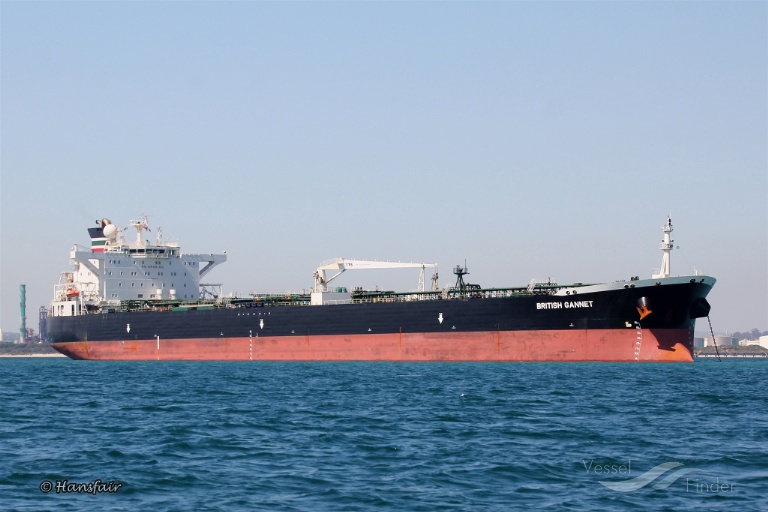
France’s decision to board a Russia-linked oil tanker in the Atlantic marks a significant escalation in Europe’s campaign against Moscow’s so-called shadow fleet, a sprawling network of ageing vessels used to move crude oil around sanctions regimes and keep Kremlin revenues flowing despite Western restrictions.
In a statement posted on Sunday, Emmanuel Macron said the French Navy had boarded the Madagascar registered tanker Tagor on the high seas with support from several allies, including the United Kingdom. The vessel was reportedly sailing from Russia and was subject to international sanctions. Macron described the operation as fully compliant with international maritime law and framed it as part of a broader effort to prevent sanctions evasion linked to Russia’s war in Ukraine.
The move is the latest in a series of increasingly assertive maritime interventions by Paris. Earlier this year, French forces intercepted and boarded the tanker Grinch in the Mediterranean, followed by the seizure of another vessel, Deyna, which French authorities alleged was operating within Russia’s shadow fleet network. Both operations were conducted with support from allied navies and signalled a willingness by European states to move beyond sanctions paperwork and into direct enforcement.
For observers of the issue, the latest action will be seen as validation of warnings repeatedly raised in previous EU Today investigations and in the publication’s White Paper on Russia’s shadow fleet. Those reports argued that sanctions enforcement had become the weakest link in the West’s economic campaign against Moscow, allowing billions of euros in oil revenues to continue reaching the Russian state through opaque shipping arrangements, flag-hopping, falsified documentation and poorly regulated insurers.
The EU Today White Paper contended that sanctions were only as effective as their enforcement mechanisms and warned that the growth of the shadow fleet represented not merely a commercial loophole but a strategic challenge to European security. According to the paper, many of the vessels involved operate under flags of convenience, frequently change ownership structures and often sail with limited insurance coverage, creating both financial and environmental risks.
That assessment has increasingly entered the policy mainstream.
The International Maritime Organization formally acknowledged concerns surrounding so-called “dark” or “shadow” shipping activities, while European governments have become progressively more vocal about the security implications of vessels operating with obscured ownership and questionable compliance records.
Western officials argue that the issue extends far beyond oil exports. Intelligence agencies and maritime analysts have raised concerns that shadow fleet vessels may be involved in broader sanctions-busting activities, including the movement of restricted goods and technologies. Several incidents in European waters have also heightened fears that poorly maintained vessels operating outside normal regulatory frameworks could pose risks to critical infrastructure and marine environments.
The economics behind the shadow fleet are straightforward. Following the introduction of G7 and EU price caps on Russian oil exports after the invasion of Ukraine, Moscow and associated trading networks sought alternative methods to keep crude flowing to international buyers. Hundreds of older tankers were purchased through opaque corporate structures, often registered in jurisdictions with limited regulatory oversight. The vessels then moved Russian oil to markets in Asia, the Middle East and elsewhere, frequently relying on ship-to-ship transfers, altered tracking data and changing ownership records to obscure origins.
The result has been the emergence of what some analysts describe as one of the largest sanctions-evasion operations in modern maritime history.
European governments have struggled to balance competing priorities. On one hand, policymakers want to restrict Russian revenues that help finance military operations in Ukraine. On the other, they remain wary of disrupting global energy markets or provoking direct confrontations at sea.
France appears increasingly willing to test those boundaries.
Macron’s language following the boarding of Tagor was notably uncompromising. He stated that ships circumventing sanctions and helping finance Russia’s war were unacceptable and stressed that operations would continue within the framework of international law.
The operation also highlights growing Anglo-French cooperation on maritime sanctions enforcement. British authorities have been among the most aggressive advocates of tougher measures against the shadow fleet, imposing sanctions on dozens of vessels and pressing allies to increase inspections and interdictions. France’s actions suggest that some European governments are now prepared to back sanctions policy with visible naval power.
Whether such operations will materially reduce Russian oil revenues remains uncertain.
The shadow fleet has proven remarkably adaptive. Vessels routinely change names, flags and ownership structures. Tankers sanctioned in one jurisdiction often reappear elsewhere under new registrations. Maritime experts note that enforcement actions against individual ships may raise costs and create delays, but dismantling the wider network requires sustained international coordination.
Yet symbolism matters. The boarding of Tagor sends a message that European governments are becoming less willing to tolerate what many officials regard as industrial-scale sanctions evasion occurring in plain sight.
For supporters of stronger enforcement, it represents precisely the type of action advocated in EU Today’s reporting and White Paper recommendations: coordinated naval operations, greater intelligence sharing, stricter vessel inspections and a willingness to challenge suspect ships operating under dubious legal arrangements.
The broader question is whether Sunday’s operation marks another isolated interception or the beginning of a more systematic European maritime strategy. If the latter proves true, Russia’s shadow fleet may soon find that Europe’s patience — like the ocean routes it has long relied upon — is becoming increasingly restricted.
Main Image: Hans Fairhurst, via VesselFinder.com
https://eutoday.net/wp-content/uploads/2025/10/EU-Today-White-Papar-Shadow-Fleet.pdf
Click here for more News & Current Affairs at EU Today
Click here to check out EU TODAY’S SPORTS PAGE!
___________________________________________________________________________________________________________________