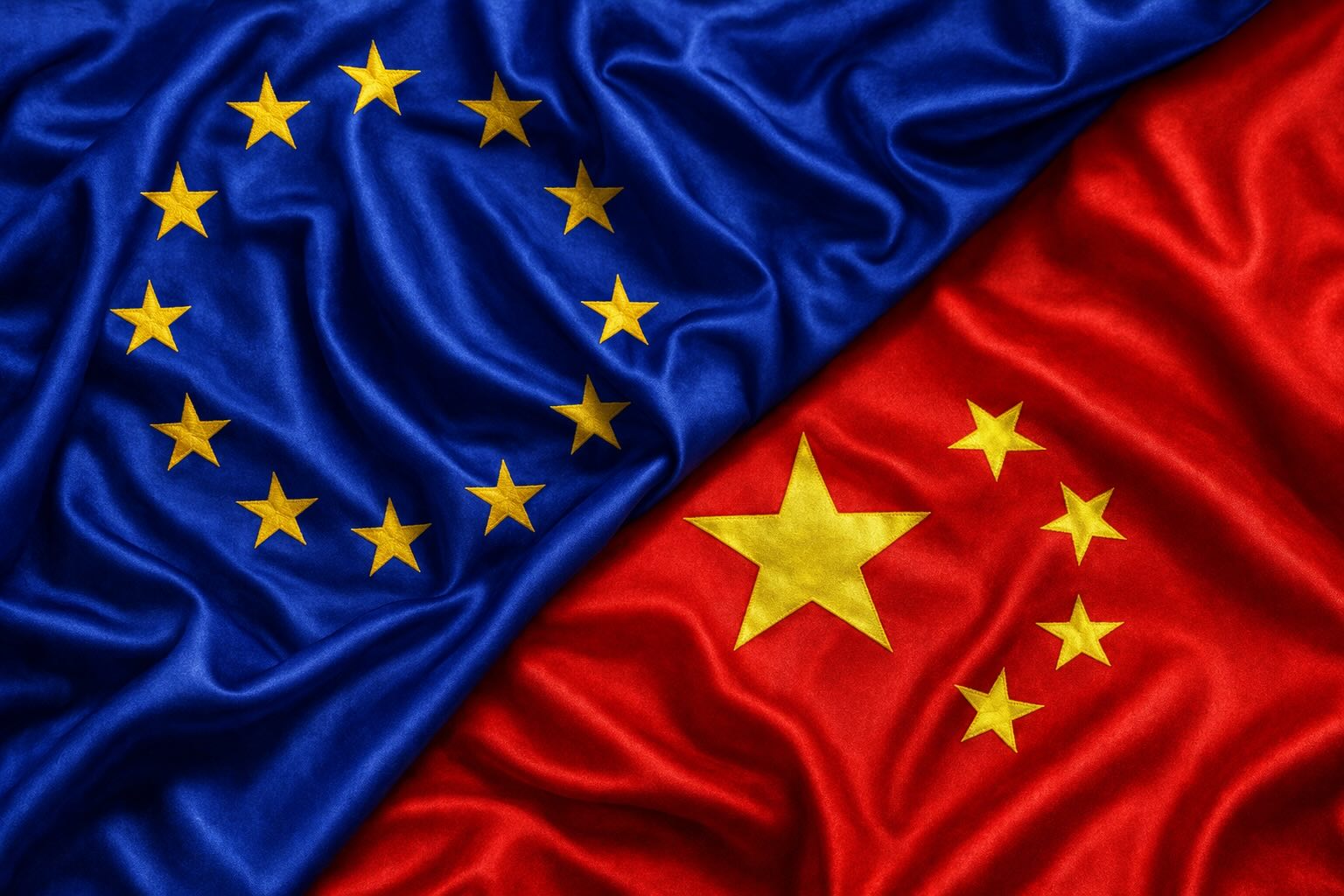
A delegation from the European Parliament’s internal market committee began a visit to China on 31 March, the first such trip in eight years, offering a narrow opening for dialogue despite continuing disputes over trade, market access and Beijing’s wider strategic positioning.
China on Tuesday welcomed a visit by European Union lawmakers as an opportunity to stabilise relations, as a delegation from the European Parliament arrived in Beijing and Shanghai for the first parliamentary mission to China in eight years. The visit was presented by Beijing as a constructive step after a prolonged period of political and commercial tension between the two sides.
The delegation comes from the European Parliament’s Committee on the Internal Market and Consumer Protection, known as IMCO. According to the Parliament’s own agenda and committee material, the mission runs from 31 March to 2 April and is intended to examine China’s digital economy, e-commerce systems, customs and logistics, consumer behaviour and market trends. The Parliament said MEPs are expected to discuss digital and e-commerce challenges, fair competition, breaches of EU rules and the large volume of non-compliant small parcels entering the European market from China.
Chinese foreign ministry spokeswoman Mao Ning said the visit would help promote exchanges and cooperation between the legislative bodies of China and Europe, improve the European Parliament’s understanding of China and contribute to what Beijing described as the “sound and steady” development of China-EU relations. The mission begins at a time when China is seeking to prevent further deterioration in relations with Europe and to rebuild channels of contact after retaliatory sanctions disrupted parliamentary exchanges for years.
The immediate agenda is more practical than strategic. The delegation is due to meet Chinese legislators as well as representatives of companies including Shein, Alibaba and Temu. The focus is therefore not on a broad political reset, but on a set of concrete commercial and regulatory issues that have become increasingly contentious in EU-China relations, particularly online retail, product safety, customs enforcement and market fairness.
That focus reflects the current state of the relationship. The European Union has become more assertive in responding to the scale of low-value imports entering the bloc through online platforms, many of them linked to Chinese sellers. EU had agreed customs reforms under which online platforms selling into the bloc would be treated as importers and made responsible for customs duties and product-safety compliance, with repeat violations potentially leading to fines of 1% to 6% of annual EU sales. That policy context helps explain why the current mission is centred on internal market and consumer protection questions rather than on a broader diplomatic agenda.
EU customs overhaul targets unsafe e-commerce imports as bloc tightens pressure on online platforms
The visit also takes place against a wider background of mistrust. EU-China ties remain strained by the trade imbalance, by European concern over China’s relations with Russia during the war in Ukraine, and by disputes over export controls, including on rare earths. Those structural issues are far larger than the parliamentary mission itself, and there is no sign from the current reporting that the trip will produce any immediate policy shift on them.
That is why the story is better understood as a limited diplomatic test rather than a turning point. The resumption of parliamentary contact matters because it restores one channel that had largely fallen dormant. But the delegation’s scope, as set out by the European Parliament, is technical and regulatory. It is intended to gather first-hand insight into how China’s e-commerce and logistics systems operate and to translate that understanding into stronger EU consumer protection and fairer market conditions.
For Europe, the geopolitical significance lies in the fact that even a narrowly defined mission now carries broader weight. EU-China relations are being shaped at once by trade defence, technology controls, industrial competition, Russia’s war against Ukraine and Europe’s effort to reduce strategic dependencies. In that setting, a visit that might once have been treated as routine committee business now serves as a small but visible indicator of whether dialogue can continue in parallel with sharper policy rivalry.
The most realistic conclusion for now is a restrained one. The mission may improve communication and provide MEPs with direct exposure to the Chinese market and regulatory environment. It may also help Beijing show that some engagement with European institutions remains possible. But the underlying disagreements that have driven the relationship into a more guarded phase remain in place. On 31 March, what began in Beijing was not a reset, but a cautious attempt to manage a difficult relationship through a narrow, workable agenda.