

Patrick Lee’s victory at the Employment Tribunal is not just a personal triumph. It is a reclamation of a principle Britain once considered inviolable: the right to speak the truth without fear.
For too long, the nation has been living under a polished illusion of liberty. Behind it lurked a quiet tyranny—a new blasphemy law enforced, not by Parliament, but by institutions terrified of offending Islam. This week, that pretence crumbled.
Mr Lee, a seasoned actuary, endured four years of relentless persecution by the Institute and Faculty of Actuaries for stating facts drawn from Islamic texts.
His “crime” was to question certain doctrines on social media. The institution condemned his words as “offensive” and “inflammatory,” levying fines, bans, and public humiliation. Yet his observations were neither hateful nor extreme—they were reasoned, evidence-based truths. In punishing him, the professional body became the executor of a modern clerical censorship, policing thought without a single vote in Parliament.
The tribunal’s ruling marks a watershed. It confirms that Islam-critical beliefs are protected under the Equality Act and delivers the first decisive legal rebuke to Britain’s soft theocracy. Free speech, the court reminded us, includes the right to offend. To praise a religion while forbidding critique is not freedom—it is submission.
For years, Britain tolerated a hierarchy of offence: Christianity could be mocked with impunity, while Islam became untouchable. Comedians, MPs, teachers, and journalists all learned to tiptoe around one faith while ignoring the principles of fairness and reason. That asymmetry ends here.
Mr Lee joins a growing cadre of citizens refusing to bow to bureaucratic intimidation. Like Maya Forstater before him, he resisted a system that confuses manners with morality. These victories are not abstract victories for principle—they are warnings to every institution that mistakes politeness for obedience. Truth is not preserved by censorship; ignorance is. And ignorance, as Rotherham and other scandals revealed, costs lives.
The deeper rot is cultural. Society has been taught that offence is violence, that feelings outweigh facts, and that freedom must always be “balanced” by sensitivity. Within this climate, Islam became untouchable. The danger was social, not legal: the fear of losing one’s career, safety, or standing for stating what history or scripture clearly shows. In effect, the mob took the place of the mullah, silencing dissent. And the establishment, as ever, chose appeasement over principle.
Patrick Lee’s victory dismantles that illusion. A free nation does not shield beliefs from scrutiny; it protects the right to scrutinise them. His case exposes the absurdity of a system that celebrates blasphemy against Christianity as art but punishes reasoned criticism of Islam as hate. Facts are not bigotry. Reason is not intolerance. And questioning orthodoxy is not rebellion—it is the lifeblood of progress.
This ruling has consequences beyond one professional body. It is a rebuke to the creeping self-censorship that has hollowed public debate. It warns the government against reviving its “Islamophobia” plans, which risk embedding fear into law and making truth a crime. Patrick Lee has shown that courage, reason, and principle can triumph against institutional intimidation. He reminds Britain that liberty is not a courtesy; it is a right.
The tribunal’s decision also restores a sense of proportion to public life. Criticism of any faith should be measured, reasoned, and civil—but it should never be criminalised or silenced by bureaucrats. Britain’s strength has long been its tolerance for debate, dissent, and disagreement. By defending Mr Lee, the courts reaffirmed that freedom of speech includes the right to disturb, shock, and challenge sacred cows. Without it, civilisation stagnates.
For decades, Britain allowed feelings to trump facts, offence to override reason, and sensitivity to suppress inquiry. Patrick Lee’s case is a reminder that liberty cannot flourish under such constraints. Courage is required. Facts must be spoken. And institutions must resist the temptation to substitute deference for principle.
This is more than the story of one man. It is a moment of cultural reawakening. It is a reminder that free nations do not fear criticism—they cherish it. The tribunal has reminded the country that truth is not an offence and that the public has a right to hear it, even if it disturbs comfort or tradition.
Patrick Lee has restored what Britain once held sacred: the right to speak the truth without fear. In an age of sensitivity and self-censorship, his victory is a beacon. It is proof that courage still matters, that reason still counts, and that freedom, once compromised, can be reclaimed. Liberty is not convenience. It is defiance. And this week, Patrick Lee has defiantly reminded us why it matters.
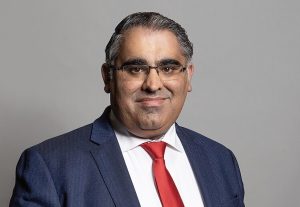
Main Image: Patrick Lee, https://x.com/JChimirie66677/status/1987229447188324452/photo/1
__________________________________________________________________________________________________________________
Read Also: LABOUR MP TAHIR ALI CALLS FOR BLASPHEMY LAWS IN UK PARLIAMENT
Labour MP Tahir Ali stirred debate in the UK Parliament this week when he called for the introduction of blasphemy laws prohibiting the desecration of religious texts and figures revered in Abrahamic religions.
__________________________________________________________________________________________________________________

