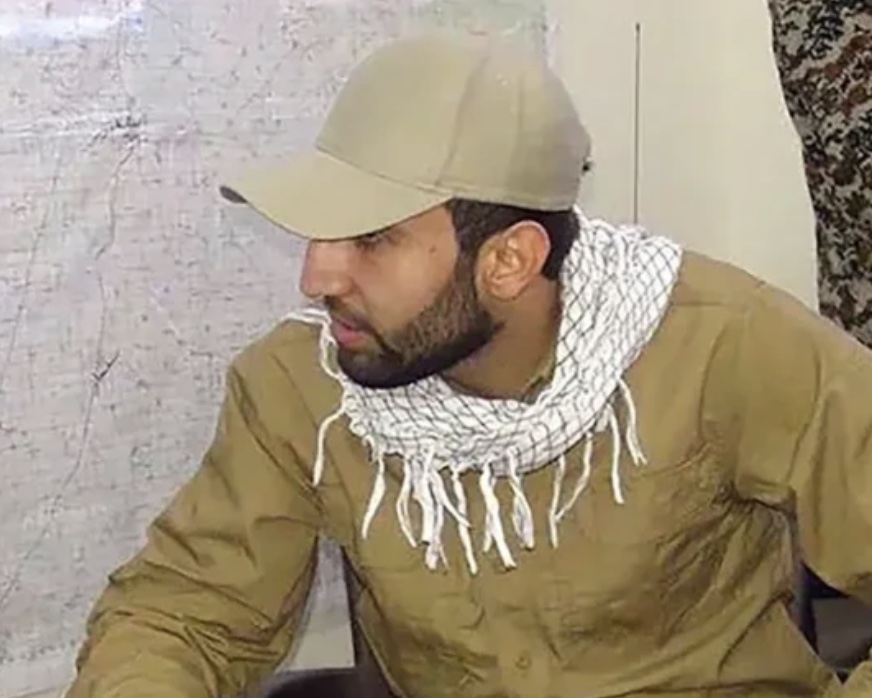
The arrest of an alleged Iraqi militia commander accused of orchestrating a wave of terror plots stretching from Belgium to New York is a chilling reminder that the long reach of Middle Eastern extremism has once again extended deep into the heart of the West.
American prosecutors say 32-year-old Mohammad Baqer Saad Dawood al-Saadi, a senior figure within the Iranian-backed Iraqi militia Kataib Hezbollah, directed or inspired a sprawling campaign of attacks against Jewish and American targets across Europe and North America in retaliation for the recent conflict involving Iran.
If the allegations prove true, the case represents one of the most ambitious transnational terror conspiracies uncovered in recent years — a campaign allegedly spanning multiple countries, involving explosives, arson, stabbings and plans for mass-casualty attacks on synagogues in the United States.
The criminal complaint filed in Manhattan paints a picture of a man deeply embedded within the machinery of Iran’s regional proxy network. Prosecutors allege Saadi worked closely with the late Qasem Soleimani, the feared commander of Iran’s Islamic Revolutionary Guard Corps, whose assassination in a US drone strike in 2020 turned him into a martyr figure among Tehran’s allies.
According to US authorities, Saadi sought revenge not merely through rhetoric, but through coordinated violence aimed squarely at Jewish communities and American interests.
The alleged campaign began in Europe earlier this spring. On 9 March, investigators say, explosives were used in an attack on a synagogue in Liège, Belgium. Within days came an arson attack against a synagogue in Rotterdam, followed by an explosives attack on a Jewish school in Amsterdam. Another attack reportedly targeted the Bank of New York Mellon in the Dutch capital.
From there, the violence allegedly spread across the continent. London, Antwerp, Paris and Munich all featured in what prosecutors describe as a sustained terror campaign. Particularly disturbing was the allegation that on 29 April two Jewish men were stabbed in London in an attack linked to the broader conspiracy.
European security officials have spent years warning that Iranian-backed networks were expanding their operational reach across the continent. The accusations against Saadi will do little to calm fears that Western intelligence agencies have been struggling to contain a shadow war already under way.
Yet the most alarming allegations concern the United States itself.
Federal prosecutors say Saadi attempted to recruit an individual he believed to be connected to a Mexican cartel in order to carry out bomb attacks on American soil. Unbeknownst to him, the man was allegedly an undercover operative.
Court documents claim Saadi provided maps and photographs of a synagogue in New York City and discussed plans to attack Jewish institutions in Los Angeles and Scottsdale, Arizona. In one recorded conversation cited by prosecutors, he allegedly discussed the cost of hiring someone “to carry out a bombing operation”.
“I mean, we provide him with a Jewish temple, a Jewish centre,” he allegedly said.
Elsewhere, prosecutors claim he asked whether it would be possible to “set the three locations on fire at the same time”.
The details are horrifying not merely because of the scale of the alleged plot, but because they reflect a growing global pattern. Jewish communities across Europe and North America have faced a dramatic rise in threats, intimidation and violence in recent years, fuelled by geopolitical tensions and the increasingly aggressive activities of extremist networks operating both online and in the real world.
Saadi himself was arrested in Turkey before being transferred into FBI custody and flown to the United States. He now faces six terrorism-related charges, including conspiracy to provide material support to a foreign terrorist organisation and conspiracy to bomb places of public use.
The US Justice Department has been keen to present the arrest as a major victory in the fight against international terrorism. Acting Attorney General Todd Blanche declared that the operation demonstrated America’s determination to “disrupt and dismantle foreign terrorist organizations and their leaders”.
But the case is already attracting controversy.
Saadi’s lawyer, Andrew Dalack, insists his client is the victim of what he describes as a “political prosecution”. He argues that Saadi should be considered a prisoner of war rather than a criminal defendant and claims his transfer from Turkey to the United States occurred without proper legal safeguards.
Dalack has also criticised the conditions of his client’s detention, saying Saadi is being held in solitary confinement under what he described as cruel and unnecessary conditions.
Such arguments are unlikely to generate much sympathy among a public confronted with allegations involving synagogue bombings, arson attacks and attempted mass murder. Nevertheless, they hint at the complicated legal and diplomatic terrain that cases involving alleged foreign militants often produce.
The broader significance of the case may ultimately lie beyond the courtroom.
For years, Western governments have attempted to distinguish between Iran itself and the network of militias, proxies and ideological allies through which Tehran projects power abroad. Yet the allegations against Saadi reinforce the argument that the distinction has become increasingly artificial.
Kataib Hezbollah has long operated as one of Iran’s most powerful regional proxies. If prosecutors are correct, the organisation’s activities are no longer confined to the battlefields of Iraq or Syria, but now encompass a coordinated campaign of violence reaching into Europe and North America.
The message from Washington appears clear: the era in which such groups could operate at arm’s length from direct accountability may be coming to an end.
Click here for more News & Current Affairs at EU Today
Click here to check out EU TODAY’S SPORTS PAGE!
___________________________________________________________________________________________________________________