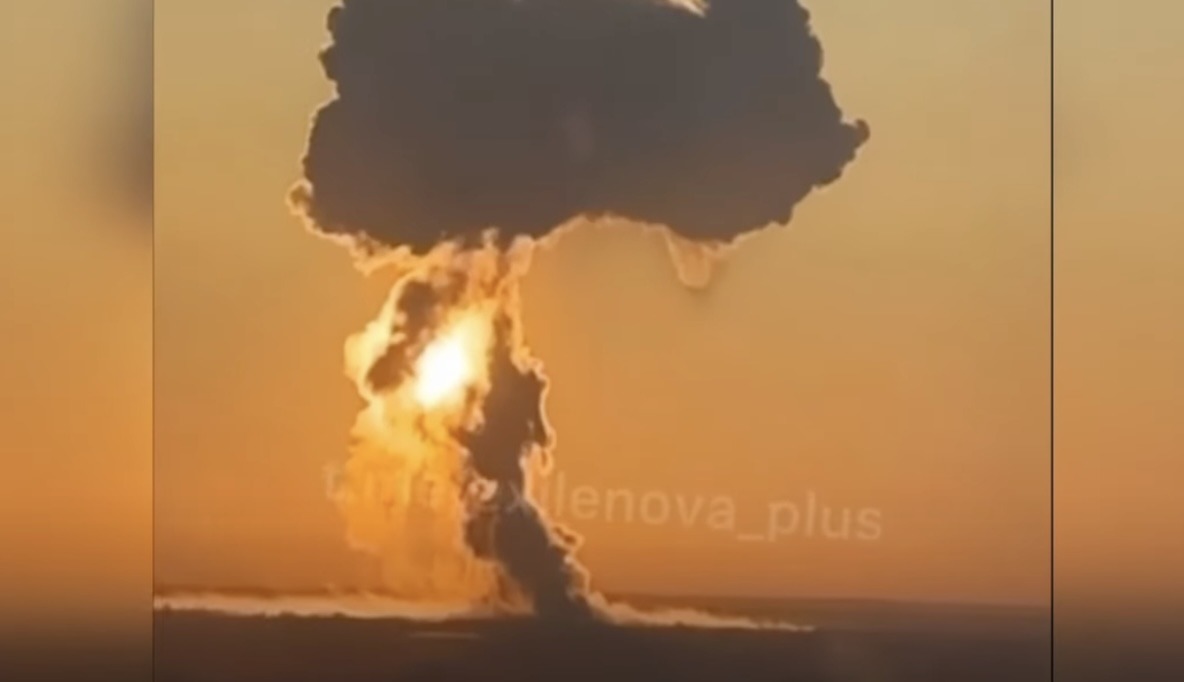
Ukrainian military forces have reportedly conducted a successful strike on a strategic missile depot located on Russian territory, marking a significant escalation in Ukraine’s long-range strike capabilities.
According to multiple sources, the attack targeted Engels Airbase in Russia’s Saratov region, home to Tu-95 and Tu-160 strategic bombers used for launching cruise missiles against Ukraine.
Initial assessments suggest that the Ukrainian strike destroyed a substantial stockpile of Kh-101 and Kh-555 cruise missiles. These weapons, each valued between $5 million and $15 million, are a key component of Russia’s aerial assault strategy.
If the estimated destruction of 40 to 70 missiles is accurate, Russia may have suffered financial and strategic losses amounting to approximately $500 million.
Impact of the Attack
Engels Airbase has been a critical hub for Russia’s strategic aviation operations. Ukrainian sources suggest that the depot’s explosion was accompanied by secondary detonations, indicating the presence of significant munitions rather than aviation fuel, as initially speculated. This assessment is reinforced by video footage from the site, showing large fireballs and widespread debris, consistent with an ammunition explosion rather than a fuel depot fire.
Reports indicate that debris from the blast was scattered up to five kilometres from the impact site, raising speculation that several aircraft stationed at the base may have been damaged. If confirmed, this would mark a considerable setback for Russia’s ability to conduct long-range airstrikes against Ukraine.
Advanced Ukrainian Capabilities
The nature of the strike has led analysts to speculate that Ukraine may have employed its newly developed long-range cruise missile, the “Neptune.” Previously known for its anti-ship capabilities, the Neptune system has reportedly been modified for land-based attacks, with an estimated range of 1,000 kilometres. Ukrainian defence analysts suggest that a combination of drones and missile strikes was used to penetrate Russian air defences at Engels, which is known for having one of the most heavily fortified air defence networks in the country.
The reported attack follows the pattern of coordinated Ukrainian strikes, where drone swarms are used to overwhelm enemy defences before launching precision-guided munitions. If confirmed, the successful penetration of Russia’s air defence systems at Engels would highlight the increasing vulnerability of key Russian military installations.
Strategic and Political Implications
This development comes amid ongoing discussions surrounding a possible ceasefire agreement, reportedly being pursued by U.S. President Donald Trump. However, Moscow’s continued missile and drone attacks on Ukrainian infrastructure, despite reports of negotiations, suggest that Russia remains committed to its aerial campaign.
Ukrainian officials argue that only sustained military pressure, rather than diplomatic overtures, will force Russia to reconsider its strategy. The destruction of a significant cache of high-value weaponry, coupled with potential aircraft damage, could constrain Russia’s ability to launch large-scale missile barrages in the coming months.
Challenges for Russia’s Military Supply Chain
Beyond the immediate material loss, the attack on Engels raises concerns for Russia’s long-term ability to replenish its stockpile of advanced cruise missiles. Western sanctions have severely restricted Moscow’s access to critical electronic components required for missile production. The reduction in large-scale attacks over recent months is attributed, in part, to these supply constraints.
Since the beginning of 2024, Russian missile barrages have become less frequent, with intelligence sources suggesting that Russia has struggled to manufacture and stockpile advanced weapons at pre-war levels. The latest attack further complicates the situation for Moscow, potentially forcing it to reconsider its strategy and military priorities.
Read also:
António Costa Warns Against Strategic Mistakes in Ukraine Ceasefire