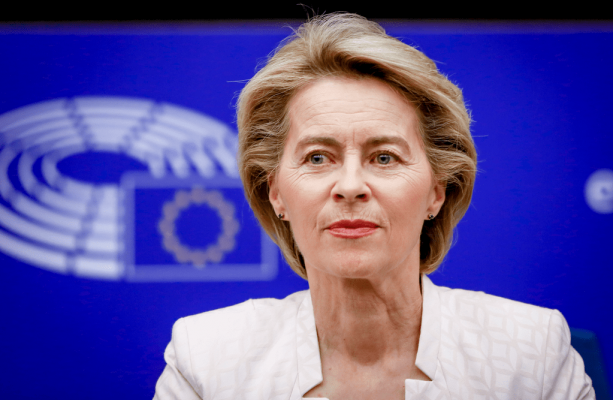
Europe has long cherished the notion that it had transcended history. Somewhere between Maastricht, monetary union, and the leadership Ursula von der Leyen, the continent persuaded itself that rules could replace power and that integration could substitute for strategy.
Wars were commemorated (albeit somewhat embarrassingly), not anticipated; crises were managed through communiqués; geopolitics was something that happened elsewhere.
Now, abruptly, the illusion is fading.
Emmanuel Macron recently described the international situation as “a world in disarray” and warned that Europe must finally learn to behave as a power. The remark, in previous years, might have been dismissed as a familiar French sermon about “strategic autonomy”. Today it sounds less like rhetoric than recognition. Europe has discovered that while it was refining regulations, others were refining influence.
For the first time since the Cold War, the continent faces simultaneous pressures from both east and west. China is no longer merely a vast consumer market but a technological and industrial competitor, producing sophisticated goods at scale and speed. At the same time, the United States — for decades the unquestioned guarantor of Europe’s security — is increasingly preoccupied with its own strategic priorities and less inclined to carry the burden indefinitely.
Europe’s difficulty is not simply external. It is institutional.
The European Union was built to prevent conflict within Europe, not to project power beyond it. Its genius lay in reconciling former enemies through law, negotiation and mutual dependency. But those same mechanisms now reveal their limits. Decision-making is slow, responsibility diffuse, and accountability blurred. The system excels at drafting directives but struggles to act with urgency.
Criticism of the European Commission has intensified in recent years, particularly under the presidency of Ursula von der Leyen. Supporters credit her with steering the bloc through the pandemic and coordinating sanctions policy. Yet critics — increasingly found not only among Eurosceptics but within mainstream political circles — argue that the Commission has become over-centralised, overly bureaucratic and inclined to legislate before it strategises.
Business leaders complain of regulatory accumulation that discourages innovation and investment. National governments privately grumble about directives devised in Brussels that ignore local economic realities. Even sympathetic observers concede that the Commission often behaves as a rule-making authority rather than a strategic executive.
Von der Leyen herself once remarked that Europe operates “with the handbrake on”. The problem, many now suggest, is that the handbrake is institutionalised. Regulatory ambition has outpaced economic dynamism. The single market exists on paper more completely than in practice, still fragmented by national barriers and procedural complexities. For companies seeking to scale, the United States often appears simpler and faster; for investors, Europe frequently appears cautious and slow.
This matters because economics and security are now inseparable. Supply chains have become strategic vulnerabilities, technology a theatre of competition, and industrial policy a form of defence. A continent that regulates well but produces little risks dependence. And dependence, in a harsher world, becomes weakness.
Defence presents an even sharper challenge. European nations increasingly acknowledge that reliance on American military power constrains political autonomy. For three generations the arrangement seemed permanent: Washington deterred, NATO protected, and Europe focused on prosperity. Defence spending fell, armies shrank and strategic thinking receded.
The geopolitical climate has changed. Trade disputes, technological rivalry and shifting alliances have forced European leaders to contemplate something unfamiliar: responsibility. Yet the political obstacles are formidable. Public opinion remains divided; some voters support rearmament but distrust Brussels, others favour integration but resist military expansion.
Here lies Macron’s dilemma. A Europe capable of strategic independence would require larger defence budgets, industrial coordination and difficult political trade-offs. Welfare expectations would meet fiscal reality. Economic openness would need to coexist with protective measures. Above all, Europe would have to rediscover statecraft — a skill dulled by decades of procedural governance.
The European Commission sits at the centre of this debate. To its advocates it represents unity and collective strength. To its critics it embodies inertia. They argue that a bureaucracy designed for consensus struggles to act decisively in a competitive world. In moments demanding speed, consultation multiplies; in crises requiring clarity, competence overlaps.
The problem is not simply personalities but structure. Twenty-seven member states produce twenty-seven priorities. The Commission attempts to harmonise them, yet the result is often compromise rather than strategy. Policies emerge comprehensive but slow, ambitious but diluted.
Macron’s “awakening” therefore extends beyond defence and economics. It is a challenge to governance itself. Can a system built to avoid power politics adapt to a world defined by it?
Europe’s strengths remain formidable: wealth, education, technological capacity and political stability. But strength unused is not strength preserved. Power, like industry, requires maintenance.
For decades Europe benefited from a benign environment in which American security and globalisation permitted internal consolidation. That era is ending. The continent must decide whether it wishes merely to regulate the world or to shape it.
History has returned, and it has little patience for procedure. The question confronting Europe is no longer philosophical but practical: can a union accustomed to negotiation learn to act? Or will bureaucracy, however well intentioned, prove equal to neither allies nor rivals?
Macron’s warning is stark precisely because it is simple. In a world of powers, those who hesitate become dependent. Europe must move — and, perhaps more difficult still, move quickly.
Centralised, Opaque, Ineffective: The European Commission Under Ursula von der Leyen’s Rule