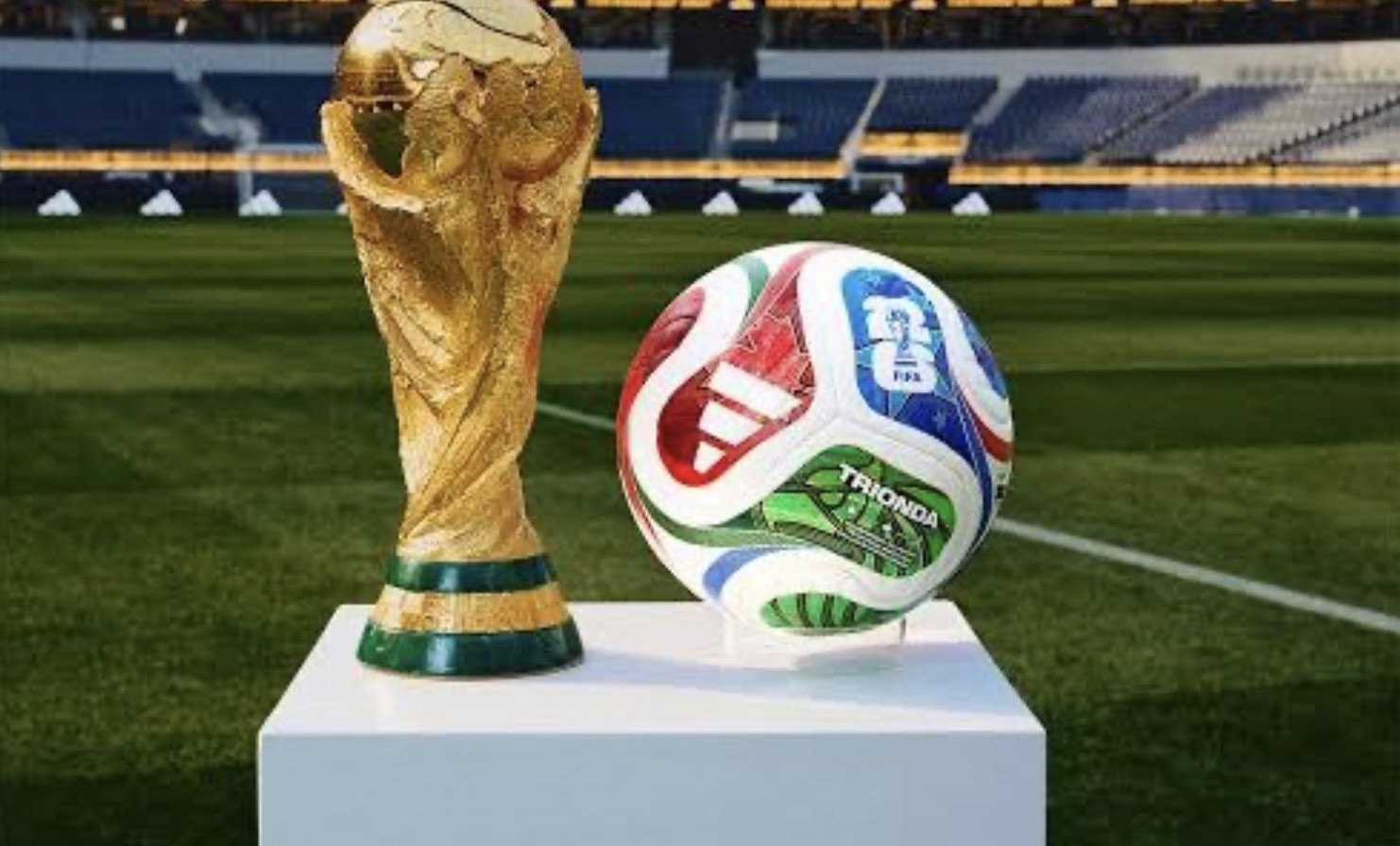
There was always a cleart business model for World Cup 2026. Expand the field, add matches, stretch the event across North America and turn football’s largest civic carnival into a still larger machine for selling tickets, sponsorship, hospitality and “fan experiences”.
The sporting case was always less obvious. Yet that has been the agreeable surprise of the tournament so far. For all the bloat, price inflation and corporate varnish surrounding it, the football itself has retained a stubborn capacity for disorder.
That disorder has been the competition’s saving grace. Enlarged tournaments are usually sold in the language of access and inclusion while being designed around the arithmetic of monetisation. More teams mean more fixtures; more fixtures mean more broadcast windows, more premium seats, more corporate guests and more opportunities to charge ordinary supporters extraordinary sums for the privilege of attending what used to be called the people’s game. World Cup 2026 has, in that sense, been a commercial success. It has also been a reminder that football remains capable of undermining the spreadsheet.
The complaints from supporters have been among the competition’s most consistent themes. Fans have bristled at extortionate ticket prices, inflated hotel bills, eye-watering food and drink costs and the general sensation that attending a World Cup in 2026 now requires the balance sheet of a medium-sized consultancy. Some of this was predictable.
Any tournament spread across the US, Canada and Mexico was always likely to expose travelling supporters to the full ingenuity of airline pricing, dynamic ticketing and beer tariffs that make one nostalgic for public regulation. Still, Fifa has a particular talent for making the extraction feel almost ideological. It speaks of access, global community and football’s universal appeal while charging as though supporters were captive demand rather than the people who supply the atmosphere, legitimacy and emotional force on which the spectacle depends.
This would all be easier to tolerate if the football had followed the familiar script. Instead, the script appears to have been misplaced somewhere between the group stage and the round of 16.
Germany are out, eliminated on penalties by Paraguay, which is the sort of result that once would have been treated as a statistical malfunction rather than a sporting fact. The Netherlands are gone too, beaten in a shootout by Morocco. Croatia have left. Senegal have left. Japan, one of the more coherent and technically satisfying sides in the competition, are out as well. Canada, one of the co-hosts and a sentimental favourite in some quarters, made the last 16 only to be brushed aside 3-0 by Morocco with brisk efficiency.
What remains is a knockout bracket with a pleasantly unregulated feel. Morocco are the outstanding story of the tournament so far, not because they have become a novelty, but because they have ceased to be one. Their progress to the quarter-finals — after eliminating the Netherlands and then dispatching Canada — has been built not on romance but on structure, discipline and a complete absence of inferiority. They now face France, which ought to be one of the most compelling ties of the tournament: the competition’s most accomplished insurgents against one of the few remaining grandees still behaving like a grande nation.
Norway, too, have given the event some welcome texture. Their run to the last 16, where Brazil await, has been one of the tournament’s quieter affronts to the established order. Paraguay have already done the public service of removing Germany. Egypt are still alive after edging Australia on penalties. Switzerland remain standing. Colombia remain standing. Mexico remain standing. Even at this stage, the surviving field still contains enough nations from outside football’s preferred boardroom shortlist to make the whole thing feel less pre-programmed than many feared when Fifa unveiled its enlarged vision.
The major powers who remain have done so with varying degrees of conviction. France continue to look faintly irritating in the way serious tournament sides often do: organised, efficient and capable of winning without inviting much emotional participation from neutrals. Argentina are still in the field after edging Cape Verde 3-2 in a game that suggested their route may be less serene than their billing. Spain and Portugal remain alive and are due to meet in a round-of-16 tie that will allow broadcasters to spend 48 hours pretending Iberian football has never previously been discussed. England have reached the last 16 in their customary state of suspended national anxiety: sufficiently competent to survive, insufficiently convincing to settle anyone’s nerves.
The player storylines have followed the same pattern of partial upheaval. Morocco’s campaign has elevated a side that now looks tactically sophisticated rather than merely spirited, and several of their younger players have used the tournament to move from scouting shorthand into wider recognition. Norway’s return to relevance has naturally renewed attention on Erling Haaland, who is hardly a discovery but remains one of the few forwards capable of making defenders look as though they were assembled in a hurry. France’s Désiré Doué has had the sort of intervention that instantly invites a fortnight of inflated transfer chatter. World Cups remain one of the last places where a player can materially alter both his reputation and his market value in the space of an hour.
The disappointments are perhaps more familiar. Germany’s senior figures have left behind the impression of a once-dominant institution living off historical capital. The Dutch managed to combine technical fluency with a curious strategic softness. Croatia looked like a gifted side reaching the natural end of a cycle. England’s established stars have not yet imploded, which in itself counts as progress, but neither have they persuaded the public that this is a team entirely comfortable with ambition. Harry Kane remains both indispensable and faintly emblematic: a world-class striker in a side that still treats attacking freedom as something requiring committee approval.
Then there is the beer, whose periodic disappearance has supplied the tournament with its most predictable subplot. Reports of bars running dry within an hour or so of England supporters arriving in town have offered a useful corrective to the official language of “fan engagement”.
Somewhere in a host city, one imagines, a bar owner is reviewing a devastated inventory sheet and concluding that English football tourism should be classified as a natural resource event. Fifa may be able to organise a 48-team transcontinental extravaganza; it still cannot guarantee that the local hospitality industry will survive contact with a travelling England crowd and a televised kick-off.
Hovering over the whole thing is one final omission. In a World Cup held partly on American soil, and in a political culture where visible success is often treated as transferable to the loudest nearby ego, it is faintly surprising that Donald Trump has not yet claimed credit for any of the goals. One assumed that by now there might have been a statement suggesting Morocco’s pressing game was inspired by his negotiating strategy, or that France’s penalty against Paraguay was somehow an endorsement of tariff policy. There is still time. The tournament is young by modern standards and expansive enough to accommodate almost anything.
That, in the end, may be the best verdict on World Cup 2026 so far. It is too expensive, too sprawling and too obviously designed by administrators who see supporters solely as revenue streams.
Yet the football has refused to behave accordingly. The giants have gone home early, the minnows have stayed late, the bars have emptied, the fans have grumbled and the bracket has developed a life of its own. For all Fifa’s efforts to turn the World Cup into a travelling corporate asset, the tournament has remained what it ought to be: a month-long argument between hierarchy and chance, usually won by chance.
__________________________________________________________________________________________________________________
Click here for more News & Current Affairs at EU Today
Click here to check out EU TODAY’S SPORTS PAGE!
___________________________________________________________________________________________________________________