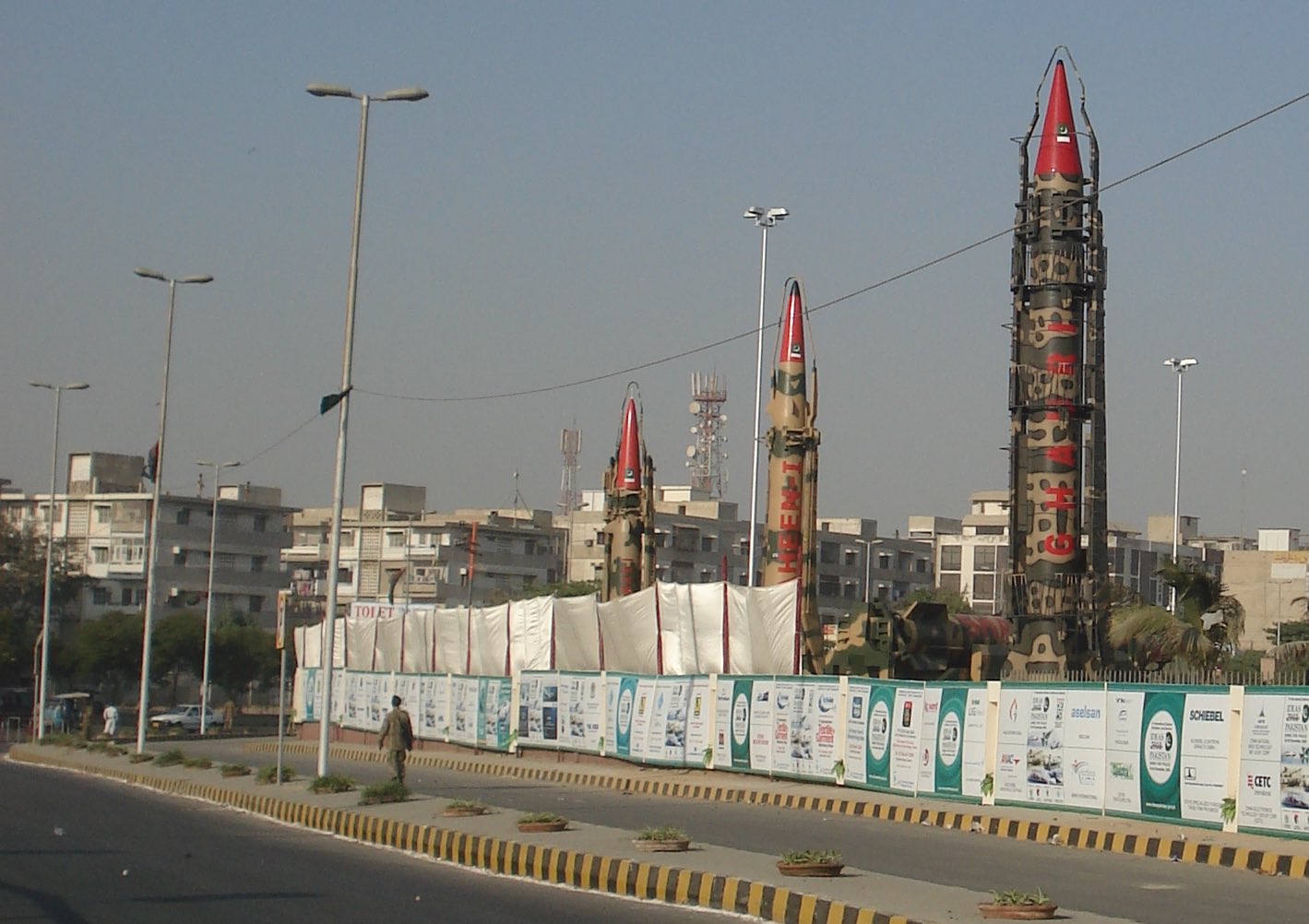
Pakistan’s nuclear weapons program remains one of the most consequential elements of South Asia’s strategic architecture.
From its inception in the shadow of military defeat to its present status as a robust deterrent, the program has shaped the country’s defence posture, regional diplomacy, and international relations. However, in recent years, rising domestic instability has added a dangerous new variable to the calculus of nuclear security.
This article explores the development of Pakistan’s nuclear arsenal, its delivery systems, the sources of its technology, and the increasingly complex risks associated with its internal political crisis.
Historical Context and Nuclear Development
The seeds of Pakistan’s nuclear program were sown in the wake of the 1971 Indo-Pakistani War, which ended with the loss of East Pakistan (now Bangladesh). This military defeat, combined with India’s 1974 nuclear test, led Prime Minister Zulfikar Ali Bhutto to commit Pakistan to developing its own nuclear capability.
Over the next two decades, Pakistan pursued uranium enrichment and warhead development in secret. While it likely possessed nuclear devices by the late 1980s, it officially joined the nuclear club in May 1998 with a series of tests conducted in response to India’s own tests earlier that month.
These tests not only confirmed Pakistan’s nuclear capability but also solidified its role as a key strategic actor in Asia.
Delivery Systems: A Diverse Nuclear Arsenal
Pakistan has invested heavily in a range of nuclear delivery systems designed to ensure credible deterrence across multiple threat vectors. Its arsenal includes ballistic missiles, cruise missiles, aircraft-based systems, and evolving sea-based platforms.
Ballistic Missiles
Pakistan’s strategic missile program features a broad spectrum of ranges:
Short-range: Nasr (Hatf-IX), designed for tactical use.
Medium-range: Shaheen I and II, Ghaznavi.
Intermediate-range: Shaheen-III, capable of striking all of India.
These road-mobile missiles enhance survivability and rapid deployment, crucial features for Pakistan’s deterrent posture.
Cruise Missiles
Systems like the Babur (Hatf-VII) and Ra’ad (Hatf-VIII) provide low-altitude, radar-evading strike capabilities, further complicating Indian missile defenses and improving strategic flexibility.
Air and Sea Delivery
Nuclear-capable aircraft (e.g., modified F-16s and JF-17s) and the development of submarine-launched cruise missiles (e.g., Babur-3) are vital components of a move toward a triad-based deterrent. A credible second-strike capability is increasingly central to Pakistan’s strategy.
Technology Acquisition and External Assistance
Pakistan’s nuclear advancement owes much to a combination of indigenous effort and foreign assistance.
Dr. Abdul Qadeer Khan played a pivotal role by bringing centrifuge designs from Europe in the 1970s. His work at the Khan Research Laboratories made uranium enrichment possible, and by the mid-1980s, Pakistan had a functioning nuclear fuel cycle.
However, Khan also became infamous for running a clandestine proliferation network, selling nuclear technology to countries like Iran, North Korea, and Libya. While Pakistan denied state involvement and placed Khan under house arrest, the episode highlighted weaknesses in oversight and accountability.
Chinese Support
China is believed to have played a critical, though covert, role in helping Pakistan’s program get off the ground:
Possible transfer of a tested warhead design.
Missile technology support (e.g., M-11 systems).
Technical advice on enrichment and weapons development.
This partnership, while never fully disclosed, has allowed Pakistan to bypass some of the limitations imposed by international nonproliferation regimes.
Strategic Doctrine and Deterrence Logic
Unlike India, Pakistan does not follow a “No First Use” (NFU) policy. Instead, its doctrine hinges on “minimum credible deterrence” and more recently, “full spectrum deterrence.” This includes:
Strategic nuclear forces aimed at deterring large-scale Indian attacks.
Tactical nuclear weapons (e.g., Nasr missile) intended to deter or respond to limited conventional incursions, particularly under India’s “Cold Start” doctrine.
While this layered approach enhances flexibility, it also increases risks, especially in a crisis. The potential use of tactical nukes on the battlefield presents serious challenges for command and control, escalation management, and civilian oversight.
Political Instability and the Nuclear Question
Perhaps the most concerning development in recent years is Pakistan’s increasing political instability. This instability has far-reaching implications for nuclear command and control, international trust, and regional crisis management.
Pakistan has long experienced a tense civil-military power dynamic, with the military wielding significant influence over national security and foreign policy. However, since 2022, this balance has been severely strained:
Ousted Prime Minister Imran Khan remains a populist force despite legal battles and imprisonment.
The current civilian government, led by a fragile coalition, lacks popular legitimacy and faces mass protests and economic crisis.
The military, especially the ISI and army high command, is under intense public scrutiny and criticism—unprecedented in modern Pakistani history.
This internal friction raises concerns about the coherence and reliability of Pakistan’s nuclear decision-making structures during a crisis. Though the military retains primary control over nuclear assets, prolonged instability could affect morale, coordination, and responsiveness.
Risk of Unauthorised Use or Miscalculation
The existence of tactical nuclear weapons, which require more decentralised command structures, exacerbates this risk. In a politically chaotic environment, the chances of miscommunication or premature deployment rise sharply.
Additionally, concerns persist about insider threats, particularly given Pakistan’s struggles with extremism within segments of its security apparatus. While international experts generally agree that Pakistan’s nuclear arsenal is currently secure, a sustained breakdown in governance could alter that assessment.
Erosion of International Confidence
Pakistan’s worsening internal situation complicates its international standing. Western powers, including the United States and members of the Nuclear Suppliers Group (NSG), remain wary of engaging too closely on civilian nuclear cooperation due to fears of instability and past proliferation behavior.
This limits Pakistan’s access to global nuclear markets and reinforces its strategic dependence on China, potentially reducing incentives for transparency and reform.
Strategic Implications for South Asia
Pakistan’s nuclear weapons have so far deterred full-scale war with India. However, they have not prevented sub-conventional or limited military conflicts, such as:
Kargil War (1999)
2001–2002 standoff
Balakot airstrikes (2019)
In each of these cases, nuclear deterrence complicated escalation management but did not preclude military action. This trend shows that deterrence is not absolute and may be increasingly fragile in a volatile domestic context.
Moreover, India’s own shift toward counterforce capabilities—which includes precision strikes on strategic assets—raises the stakes further. If Pakistan fears that its nuclear arsenal is at risk, it may move toward launch-on-warning postures, increasing the risk of rapid escalation during a crisis.
Pakistan’s nuclear weapons program has evolved from a strategic necessity into the cornerstone of its national defence. It is backed by a diverse delivery system, supported by a doctrine tailored to regional threats, and hardened by decades of investment and foreign partnerships.
Yet, the current political instability in Pakistan introduces an unprecedented level of uncertainty into this equation. While the military still oversees the nuclear command structure, the erosion of civil-military cohesion, economic collapse, and popular unrest are dangerous variables in a state that possesses over 150 nuclear warheads.
If Pakistan is to maintain both strategic stability and international confidence, urgent steps must be taken to restore governance, rebuild trust in its institutions, and ensure absolute control over its nuclear arsenal under all conditions. In the absence of such efforts, the risks—both regionally and globally—will only continue to grow.
Main Image: By SyedNaqvi90 at English Wikipedia, CC BY-SA 3.0, https://commons.wikimedia.org/w/index.php?curid=32511123
Read Also: INDIA-PAKISTAN TENSIONS ESCALATE FOLLOWING KASHMIR ATTACK, RAISING FEARS OF ARMED CONFLICT