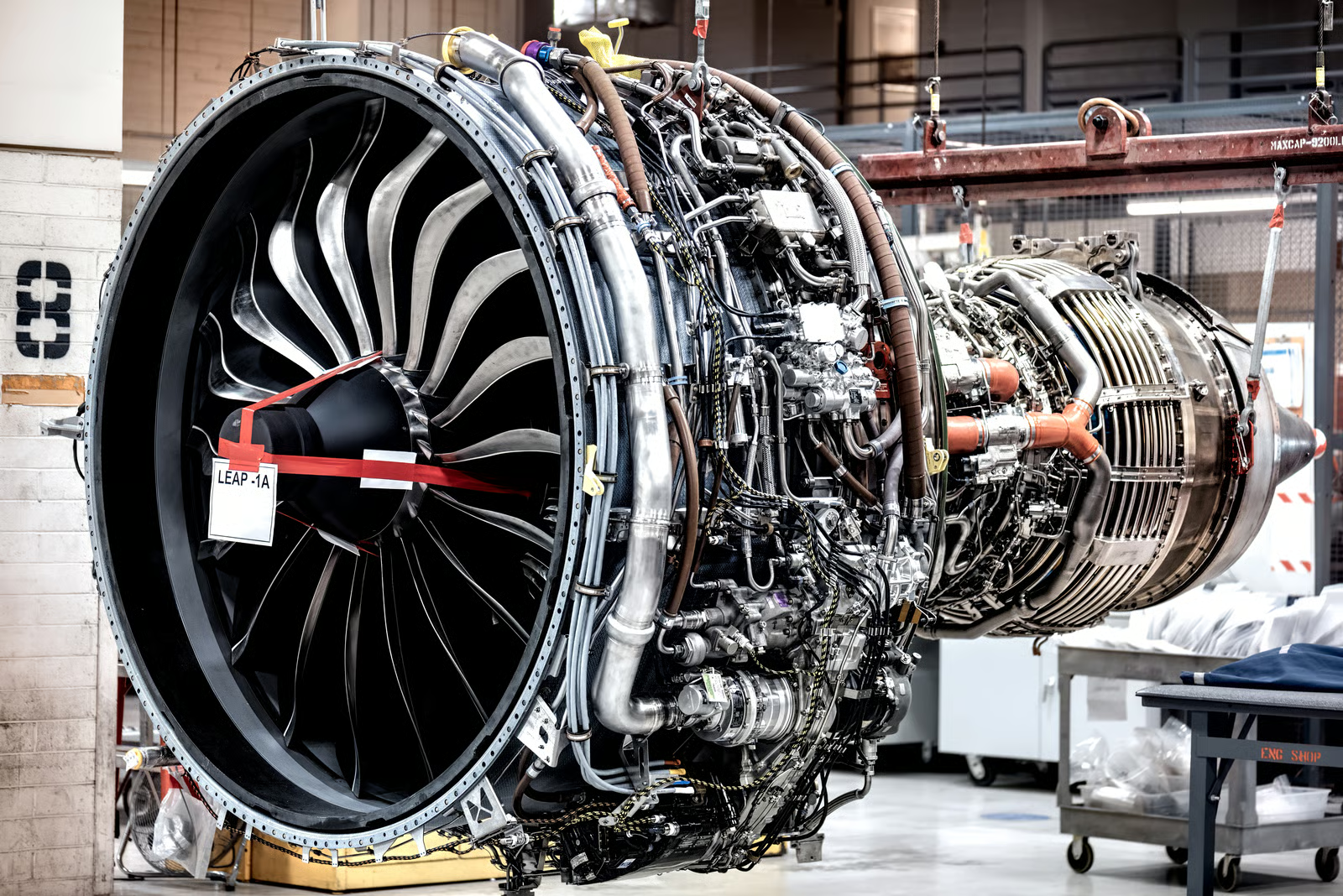
The GE-Safran joint venture’s investment is a sign that engine maintenance has become a strategic constraint on aircraft availability, airline schedules and fares.
CFM International is investing $2 billion over five years to expand engine repair capacity, as airlines continue to face maintenance bottlenecks and unexpectedly rapid wear in newer-generation engines.
The investment follows a Reuters report that CFM had won approval for a durability improvement on its LEAP engines, which power Airbus A320neo-family and Boeing 737 MAX aircraft. A later Reuters report said the GE Aerospace and Safran joint venture would spend $2 billion to speed repairs and increase overhaul capacity.
The issue matters because engine availability is now one of the central constraints in commercial aviation. Airlines can have aircraft, crews and passengers ready, but if engines are awaiting inspection, repair or replacement, capacity disappears. The result can be grounded aircraft, tighter schedules, higher fares and weaker reliability.
EU Today has previously covered how engine shortages have become severe enough to push some near-new Airbus A320neo aircraft towards the breaker’s yard. CFM’s investment confirms that the problem is not a short-term inconvenience. It is a supply-chain and maintenance-capacity challenge that requires large capital spending.
Newer engines were designed to reduce fuel burn and emissions, but some have experienced durability issues in demanding operating environments. Hot, dusty and high-cycle operations can accelerate wear, increasing shop visits and reducing time on wing. That has created pressure on manufacturers to improve parts, inspection cycles and repair capacity.
For airlines, the cost is operational. Grounded aircraft reduce network flexibility, limit growth and force carriers to lease replacement capacity or adjust schedules. Smaller airlines may be hit hardest because they have less spare fleet depth and less bargaining power for repair slots.
For passengers, the impact can appear indirectly. Fewer available aircraft can mean higher fares, fewer frequencies and more disruption when a route depends on a limited pool of serviceable jets. Maintenance backlogs may not make headlines like strikes or weather, but they can be just as important to timetable reliability.
For Airbus and Boeing, engine constraints complicate aircraft delivery and customer satisfaction. A new aircraft is less valuable if an airline worries that its engine support network cannot keep pace. Manufacturers must therefore solve not only assembly problems but also the lifecycle support around installed fleets.
For Europe, the case has an industrial dimension. Safran is a core European aerospace company, and CFM’s performance affects airlines, leasing companies and maintenance providers across the continent. Engine reliability is part of Europe’s aviation competitiveness, not just a technical matter for suppliers.
The investment also shows how aerospace supply chains are still recovering from the pandemic period. Skilled labour, spare parts, castings, forgings, repair slots and certification capacity remain tight in parts of the sector. Expanding maintenance infrastructure takes time because engine overhaul is highly technical and regulated.
CFM’s durability approval may help reduce future pressure, but it will not instantly clear the backlog. Airlines already facing constrained capacity need repair capacity now, while improved components gradually enter service.
The $2 billion plan is therefore both a fix and a warning. It shows that the industry recognises the bottleneck, but also that the solution is expensive, slow and essential to keeping aircraft in the air.
The maintenance squeeze also affects aircraft lessors and manufacturers’ reputations. If airlines cannot rely on predictable engine availability, they may delay route launches, seek compensation or alter fleet planning. Leasing companies can face lower utilisation and more complicated asset placement when engines become the limiting factor.
There is a wider European industrial-policy lesson. Aerospace competitiveness is not only about building aircraft or winning orders. It also depends on after-market capacity, repair turnaround, spare-parts availability and certification speed. CFM’s investment is therefore part of the infrastructure that makes aircraft economically useful after delivery.
The problem is likely to remain visible through airline results. Carriers may report strong demand while still being unable to add seats because engines are unavailable. That tension can make capacity scarce even in markets where passenger appetite is robust.
For regulators, the priority is safety. Durability improvements and faster repairs cannot come at the cost of inspection discipline. The commercial pressure to return aircraft to service is intense, but engine reliability is one area where the industry has little room for shortcuts.