
Opinion publishes signed columns, guest essays and op-eds from policymakers, experts and practitioners. Pieces present argued viewpoints on European policy, politics, business, society, culture and international affairs. Articles are clearly labelled as commentary and reflect the author’s views. Commissioned responses and letters may be included where relevant.
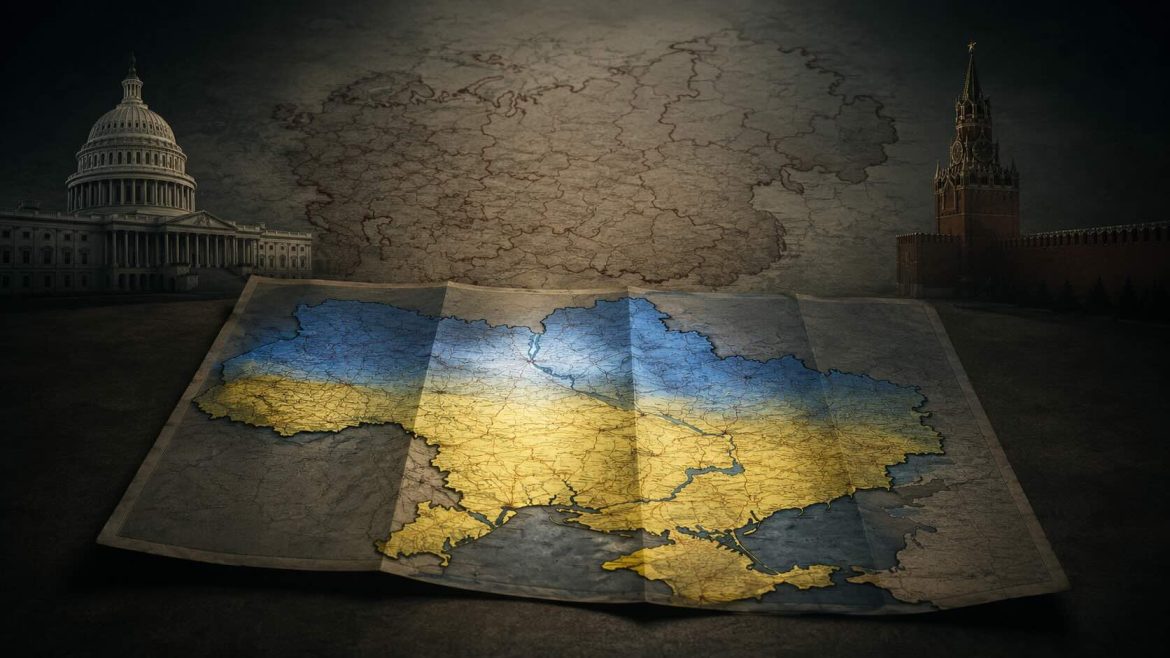
Victor Rud argues that Ukraine’s independence helped end the Soviet Union and strengthen America’s global position in 1991 — and that abandoning Ukraine now would assist Russia’s attempt to reverse that outcome.
Celebrating July Fourth, we should reflect on Patrick Henry’s call, “Give me liberty or give me death,” and simultaneously on our growing Orwellian legacy in Ukraine. The irreducible essence must forever be our own security. But Ukraine is not a charity case. Russia long ago declared the destruction of Ukraine as pivotal to its long-articulated goal of ensuring America’s demise. Why? How?
Who remembers that “Make America Great Again” was Ronald Reagan’s 1980 campaign slogan? Western media and a priesthood of experts choked over his epochal “Evil Empire” speech before the National Association of Evangelicals in Orlando, Florida. But Reagan stood fast and understood the centrality of Ukraine.
Ukraine’s renewal of its independence in 1991 ensured the dissolution of the Soviet Union three weeks later. Slogan became reality. It halted America’s strategic decline and ended the Cold War losses of 100,000 of our finest and an estimated $27 trillion in today’s dollars. It restored America to a global primacy not seen since the Second World War. What’s that worth? What ally, then or since, had such an epochal consequence for our security? Yet the Pentagon’s press secretary was promoted after having declared herself “proud to be an enemy” of Ukraine. Maybe the fall of the Evil Empire was a non-event? What exactly did we think were the implications of Russian President Vladimir Putin’s declaration that the Soviet collapse was “the greatest geopolitical catastrophe of the 20th century”? We didn’t. We yawned.
Small wonder that Putin described Russia’s choice to escalate its aggression against Ukraine in 2022 as “the beginning of a radical breakdown of the US-style world order”. At the Alaska summit, Russia’s foreign minister paraded in a shirt emblazoned with “CCCP” (“USSR” in Cyrillic), planting it as a psy-ops flag of dominion. Ukraine is the stumbling block to the clawback, staring down — alone — the largest country on the planet, enveloping one third of Asia and 40 per cent of Europe. Some 950,000 troops from 39 allied nations were deployed to tiny Kuwait decades ago.
We prefer to forget that we stripped Ukraine of its ability to defend itself in the first place. Even before Putin took power, we hectored Ukraine to transfer its nuclear arsenal — the third largest in the world — to Russia, of all places. The scale was staggering: 176 ICBMs armed with 1,240 nuclear warheads, 44 strategic bombers armed with 1,081 nuclear-tipped cruise missiles, and 2,833 tactical nuclear weapons. Add uranium mining, enriched stockpiles, two research reactors and missile guidance systems. How many trillions was that worth? An existing, proven capacity operating at scale. Iran’s is a prospective ambition.
Ukraine gave it all up on our assurance that “Ukraine’s security problem will be solved once Ukraine gives up its nuclear arsenal”. We also stripped Ukraine of much of its conventional arms — “for the safety of the Ukrainian people”. It’s eye-watering.
Putin was pleased. Three years before the 2014 invasion, he declared Moscow would not be bound by its signed agreement to Ukraine’s sovereignty. Two years later, he wrote: “If you have the bomb no one will touch you.” Today, we seek to prevent Iran from going nuclear, but Tehran has factored in an indelible lesson from Ukraine: nuclear weapons deter. Washington’s assurances expire.
Despite it all, Kyiv has been our stalwart ally for decades. It deployed the third-largest Western contingent to Iraq, with Ukrainians also serving alongside NATO forces in Afghanistan. During our stampede from Kabul, it was Ukraine that rescued civilians when US forces could not. Ukrainians died for American causes … and never billed us.
The Kremlin Ukraine is battling is the same one that financed, armed and trained Hamas, Hezbollah, the IRA, and Carlos the Jackal. The same state terrorist who impersonated ISIS to threaten American military families, paid bounties to the Taliban for US scalps, and is now providing Iran with targeting information against our troops. Where do you think 9/11 and the Boston Marathon bombing are rooted?
Then there’s Russia’s febrile erasure of “Never Again”. “Your task is to wipe the Ukrainian nation off the face of the earth,” reads the wallet card issued by the Russian Orthodox Church to soldiers. “The genocide of these cretins is due and inevitable.” “The nation of Ukraine should completely disappear.” Yet President Donald Trump lauded the 2022 invasion as “genius” and “savvy”.
The 20 per cent of Ukraine that Russia now occupies is the size of South Korea — or of Austria and Switzerland combined. Freedom House, which rates people’s access to political rights and civil liberties, gives Russian-occupied Ukrainian territory a -1 rating. Communist North Korea, by comparison, is at +3. Let that sink in. Ukrainians are murdered, forcibly “re-educated”, tortured and Russified, and their children are trafficked and militarised. Some 700,000 have already been deported as far as 3,000 miles to Russia’s Far East and North Korea.
THE HIDDEN PURPOSE OF THE DRONE WAR BETWEEN UKRAINE AND RUSSIA
Trump regularly gives interviews standing in front of Reagan’s portrait in the Oval Office, and sits at Reagan’s desk, the Resolute Desk. He is, Sen. Lindsey Graham (R-SC) gushed, “Ronald Reagan plus, plus, plus.” But four decades after Reagan’s “Evil Empire” speech, half of America’s political spectrum has bolted from the Republican Party’s signature opposition to Russian predation and applauds that empire’s resurrection. Ukraine “has no impact on us,” Trump said. Russia long concluded that “There isn’t a single country in the world that is as easily manipulated as America.” It’s a vivisection of our brain, harnessing our strategic illiteracy, willed ignorance, infantile impatience, greed and venality.
But what of Trump’s performative drumbeat for a “peace agreement”? It would be a candy wrapper for hemlock, a promissory note for extinction by instalments. Former Israeli Prime Minister Golda Meir’s, born in Kyiv, conclusion applies also to Ukraine: “They said we must be dead. And we say we want to be alive. Between life and death, I don’t know of a compromise.” Are we a facilitator, enabler, aider and abettor of Russia’s annihilationist war? A framed photograph of Putin in the White House looks on. This isn’t what Reagan had in mind.
Victor Rud chairs the Foreign Affairs Committee of the Ukrainian American Bar Association and is on the board of the Centre for Eastern European Democracy. During the Reagan administration, he represented Western Soviet dissidents persecuted by the KGB. He was also special counsel to a member of the US delegation to the Helsinki Accords review conference in Madrid.

