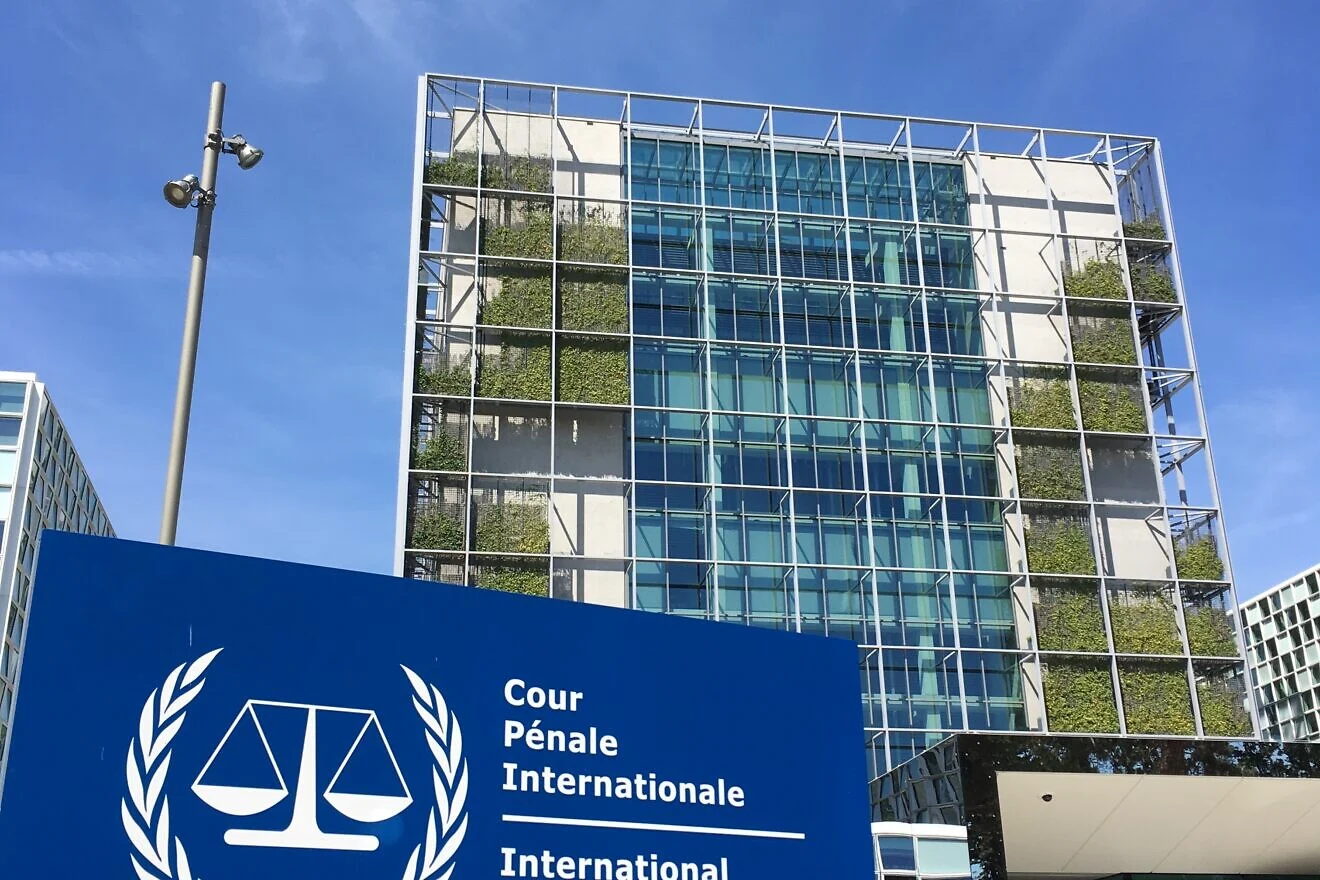
The European Union has issued a robust defence of the International Criminal Court (ICC) following an unprecedented move by the United States to impose sanctions on four of its judges.
The decision by Washington, announced under President Donald Trump’s administration, has drawn strong criticism from EU leaders, who view the sanctions as a direct threat to the independence of international justice.
European Commission President Ursula von der Leyen stated:
The Commission fully supports the @IntlCrimCourt & its officials.
The ICC holds perpetrators of the world’s gravest crimes to account & gives victims a voice.
It must be free to act without pressure.
We will always stand for global justice & the respect of international law.
— Ursula von der Leyen (@vonderleyen) June 6, 2025
The comments came as the EU reiterated its support for the court, based in The Hague, amid mounting political tensions between Brussels and Washington.
The sanctions target four ICC judges: Solomy Balungi Bossa (Uganda), Luz del Carmen Ibanez Carranza (Peru), Reine Adelaide Sophie Alapini Gansou (Benin), and Beti Hohler (Slovenia). They have been added to the U.S. Treasury’s list of specially designated nationals, resulting in the freezing of any U.S.-based assets and significant restrictions on global financial transactions. Inclusion on the list also triggers enhanced compliance scrutiny from financial institutions worldwide, affecting the ability to hold bank accounts or conduct cross-border transfers.
The U.S. action follows the ICC’s recent issuance of an arrest warrant for Israeli Prime Minister Benjamin Netanyahu, as well as the court’s earlier decision to authorise an investigation into alleged war crimes committed by U.S. forces in Afghanistan. Both steps have been met with severe opposition from Washington, which does not recognise the court’s jurisdiction over non-member states.
President of the European Council Antonio Costa described the ICC as “a cornerstone of international justice”, stressing the need to defend its independence and credibility. He reiterated the EU’s longstanding position that international legal institutions must operate free from political interference.
Slovenia, an EU member state, has taken a particularly firm stance, with its Ministry of Foreign Affairs announcing that it will push for the activation of the EU’s so-called “blocking statute”. This legal mechanism allows the European Union to prohibit its companies from complying with extraterritorial sanctions that the bloc deems to be unlawful. It has previously been invoked in relation to U.S. sanctions on Iran and Cuba.
“Due to the inclusion of a citizen of an EU member state on the sanctions list, Slovenia will propose the immediate activation of the blocking act,” the ministry said in a statement posted late on Thursday. Judge Beti Hohler, a Slovenian national, is among those sanctioned.
The ICC itself issued a formal condemnation of the U.S. move. In a statement, the Presidency of the Assembly of States Parties – the court’s governing body representing its 125 member states – said the sanctions amounted to an attempt to obstruct justice.
“These … are regrettable attempts to impede the Court and its personnel in the exercise of their independent judicial functions,” the statement read.
The imposition of sanctions comes at a sensitive time for the ICC, which has recently faced internal challenges. The court’s chief prosecutor, Karim Khan, stepped aside temporarily last month following the opening of a United Nations investigation into allegations of sexual misconduct. This has added to the pressure facing the institution, which continues to be criticised by several non-member states over perceived politicisation.
Earlier this year, ICC President Judge Tomoko Akane had called on the EU to include the ICC within the scope of the blocking statute, in anticipation of potential retaliatory measures by states opposed to its decisions. That request now appears to be gaining traction in Brussels, particularly in light of Slovenia’s position.
The move by the Trump administration represents a notable escalation in U.S. policy towards the court. While previous administrations have expressed scepticism about the ICC, direct sanctions against sitting judges remain without precedent. Furthermore, the accompanying threat that U.S. citizens could face civil or criminal penalties for assisting those on the sanctions list has raised concerns about potential extraterritorial effects on international legal cooperation.
The situation is likely to feature prominently in upcoming discussions within the European Council and the European External Action Service, as the EU considers its next steps. The use of the blocking statute would mark a significant legal and diplomatic response, signalling the Union’s determination to protect multilateral institutions from what it sees as unlawful political interference.
Despite the political tensions, the ICC continues to operate with the backing of a majority of the international community. With 125 member states, it remains the primary global institution for prosecuting individuals accused of genocide, war crimes, and crimes against humanity. The current episode is seen by many European diplomats as a test of the international community’s commitment to the rule of law on the global stage.
Read also:
Netanyahu Visits Hungary as Budapest Announces Withdrawal from ICC