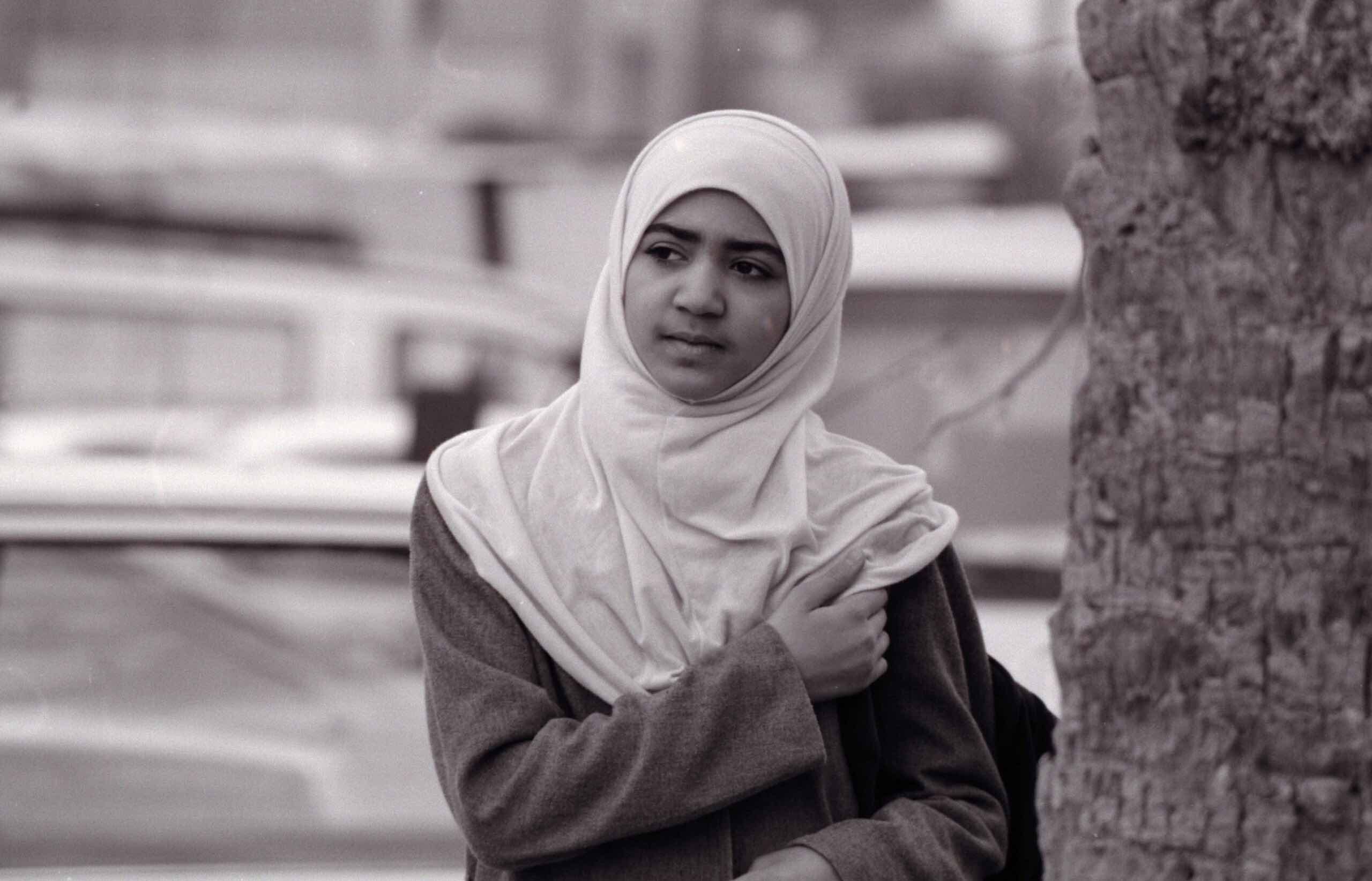
Austria’s decision to ban the headscarf for girls under 14 has already been met with the usual chorus of outrage — rights groups crying discrimination, activists warning of “stigmatisation”, and the familiar lament that Europe is somehow sliding into intolerance.
But strip away the theatrical indignation, and the truth is far less melodramatic: Austria has done what a responsible, self-confident European democracy should do. It has drawn a line in defence of children — and in defence of the most basic freedoms that too many politicians are too timid to defend.
The ban is straightforward: no child in an Austrian school, state or private, should be compelled — implicitly or explicitly — to cover her hair for religious reasons. Critics present this as an attack on Islam. In reality, it is an affirmation that little girls, whatever their background, deserve a childhood free from adult ideological battles and cultural coercion. There is nothing progressive about pretending that a girl’s purity, modesty, or moral worth hinges on how much hair she hides.
Europe has been here before. Belgium banned full-face veils in 2011. France followed with its own restrictions, upholding the principle that women should not be made invisible in public life. Denmark, the Netherlands, Austria and parts of Switzerland have taken similar steps. Every time one of these laws is passed, Western commentators wring their hands and claim it is an assault on liberty. Yet they never seem to consider the liberty of the girls and women who are pressured, cajoled, or outright forced into a form of dress that exists precisely to suppress female individuality.
Let us be honest: the hijab for young girls, and the burqa and niqab for older women, are not neutral items of clothing. They are rooted in doctrines that treat female sexuality as dangerous, female visibility as shameful, and female choice as something that must be tightly controlled. A society that turns a blind eye to these ideas in the name of “tolerance” is not being tolerant at all — it is simply abandoning the very people who need its protection most.
Austria’s ban recognises something many European governments have long been reluctant to admit: if we claim to believe in gender equality, then we cannot allow children to be socialised into a worldview that denies it. Girls aged eight, ten, twelve do not wake up one morning and independently decide that modesty codes rooted in seventh-century norms best express their personality. These decisions are made for them — by family, by community expectations, by the soft but relentless weight of cultural obligation. The state has not only the right but the responsibility to intervene when those pressures compromise a child’s autonomy.
As predictable as the backlash has been, the objections offer little substance. Some constitutional lawyers argue that targeting one religious practice risks being discriminatory. But Austria is hardly alone in facing this legal question, and courts across Europe have repeatedly upheld bans on full-face coverings on the grounds of public order, gender equality and the integrity of secular institutions. If the law must choose between appeasing cultural sensitivities and guaranteeing the rights of girls, then the choice should not be a difficult one.
Other critics warn that bans will “alienate” Muslim communities. This assumes, bizarrely, that Muslim families are monolithic and uniformly opposed to such measures. They are not. Many Muslim women across Europe have spoken forcefully about the pressure to veil, about the quiet but persistent policing of their clothing by male relatives, and about the relief they felt when social expectations loosened. Some are relieved when governments intervene precisely because it gives them — and their daughters — a socially defensible escape from coercion.
And while activists like to claim that the headscarf is a “choice”, the question that matters is: whose choice, and under what conditions? A liberal society must ensure that the choice truly belongs to the girl herself — not to parents, imams, or the vigilance of neighbours who view unveiled hair as a moral failure.
Austria’s phased implementation — first an information campaign next year, then a full rollout in 2026 — shows that the government understands what is at stake. It is not criminalising families; it is setting a normative boundary for public life. Schools are not religious institutions, and children are not cultural tokens. They are citizens in the making, and they deserve the fullest possible horizon of opportunity.
Europe must stop treating the defence of liberal values as an act of hostility. The truth is that laws like Austria’s protect the very principles that allow a pluralistic society to function. A girl who feels free to show her face and hair is a girl who feels free to participate — in the classroom, in her friendships, in her sense of identity. A society that shirks this principle in the name of “sensitivity” forfeits its moral authority.
Austria understands that. Others should follow.
Main Image: By Peter Rimar – Public Domain, https://commons.wikimedia.org/w/index.php?curid=2084878
Click here for more News & Current Affairs at EU Today
Click here to check out EU TODAY’S SPORTS PAGE!
_____________________________________________________________________________________________________________________________