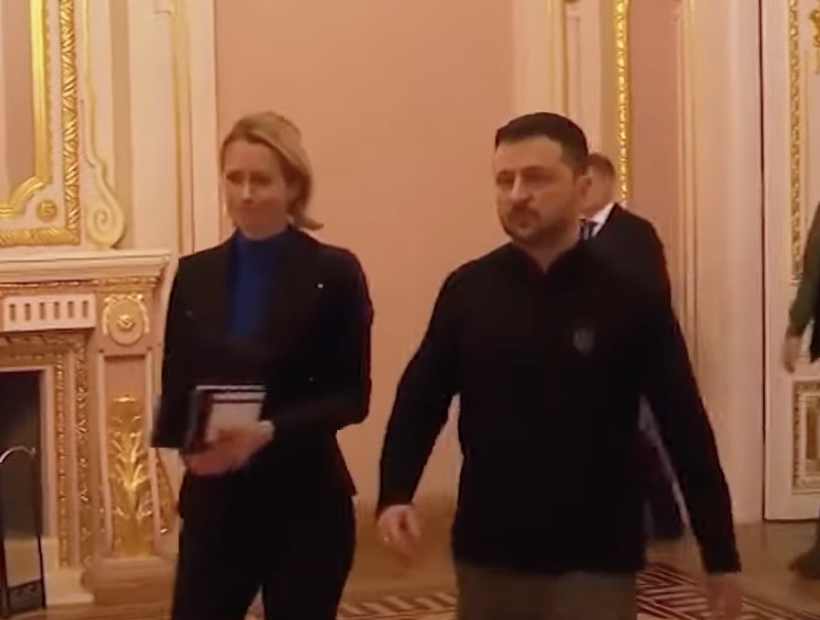
European Union foreign policy chief Kaja Kallas said on Sunday that any agreement between Washington and Moscow to end the war in Ukraine must include both Kyiv and the EU, framing the conflict as a matter of continental security. She will convene EU foreign ministers on Monday to discuss next steps.
“The U.S. has the power to force Russia to negotiate seriously. Any deal between the U.S. and Russia must have Ukraine and the EU included, for it is a matter of Ukraine’s and the whole of Europe’s security,” Kallas said in written remarks. She added that ministers would also review developments in the Middle East, including Gaza, when they meet.
Kallas underlined that international law “is clear: all temporarily occupied territories belong to Ukraine,” and cautioned that any settlement must not become a platform for renewed aggression against Ukraine, the transatlantic alliance or Europe. Her comments come ahead of a planned meeting this Friday in Alaska between U.S. President Donald Trump and Russian President Vladimir Putin.
The White House has said Mr Trump remains open to broadening the Alaska encounter into a trilateral summit with Ukrainian President Volodymyr Zelenskyy, though preparatory work has focused on a bilateral session requested by the Kremlin. The timing and format remain under discussion.
Mr Trump has said he believes a ceasefire is close and has at times suggested that a potential framework could involve territorial swaps. Moscow maintains its claims over four Ukrainian regions. No formal proposal has been published by the U.S., and Kyiv has not endorsed any arrangement involving cessions of land.
President Zelenskyy has stated that Ukraine will not cede territory and is seeking a seat at any negotiating table involving the future of the war. In weekend remarks, he thanked European leaders for support as Kyiv pressed for full participation in talks surrounding the Alaska meeting.
Zelenskyy: Europe and US Must Be at the Table in Any Peace Talks with Russia
European capitals have in recent days stressed the need to protect Ukrainian and wider European security interests as diplomacy intensifies around the U.S.–Russia contacts. Officials have underscored that any credible settlement must align with the UN Charter and Ukraine’s sovereignty and territorial integrity.
Against that backdrop, Kallas’s decision to convene foreign ministers on Monday, 11 August, points to an effort to coordinate EU positions before the Alaska talks. According to her office, the agenda will cover both the potential contours of a “sustainable and just peace” in Ukraine and the situation in Gaza, reflecting parallel regional crises occupying European diplomacy.
The EU has backed Ukraine with military, financial and humanitarian assistance since Russia’s full-scale invasion in February 2022, while adopting successive sanctions packages against Moscow. Member states have also tightened measures targeting defence supply chains and sought to reduce dependencies that could blunt enforcement. While those steps fall outside Kallas’s latest remarks, her emphasis on inclusion of both Ukraine and the EU in any talks signals continued insistence on European agency alongside the United States.
Washington’s planned meeting with Moscow is scheduled for Friday, 15 August, in Alaska. U.S., EU and Ukrainian officials have held preparatory consultations in recent days, and European leaders have indicated they will continue to press for terms that uphold Ukraine’s sovereignty and Europe’s collective security.
Misinterpretation Row Clouds US–Russia Peace Efforts Ahead of Alaska Summit