By any honest measure, Viktor Orbán is no longer a reliable ally of the West, nor should he be considered to be so.
What began as a populist experiment in national conservatism has curdled into something far more corrosive—a regime that trades in obstruction, flirts with authoritarianism, and maintains increasingly uncomfortable ties with both the Kremlin and the criminal underworld.
Hungary under Orbán is not merely a domestic concern; it has become a strategic liability for the European Union and NATO alike.
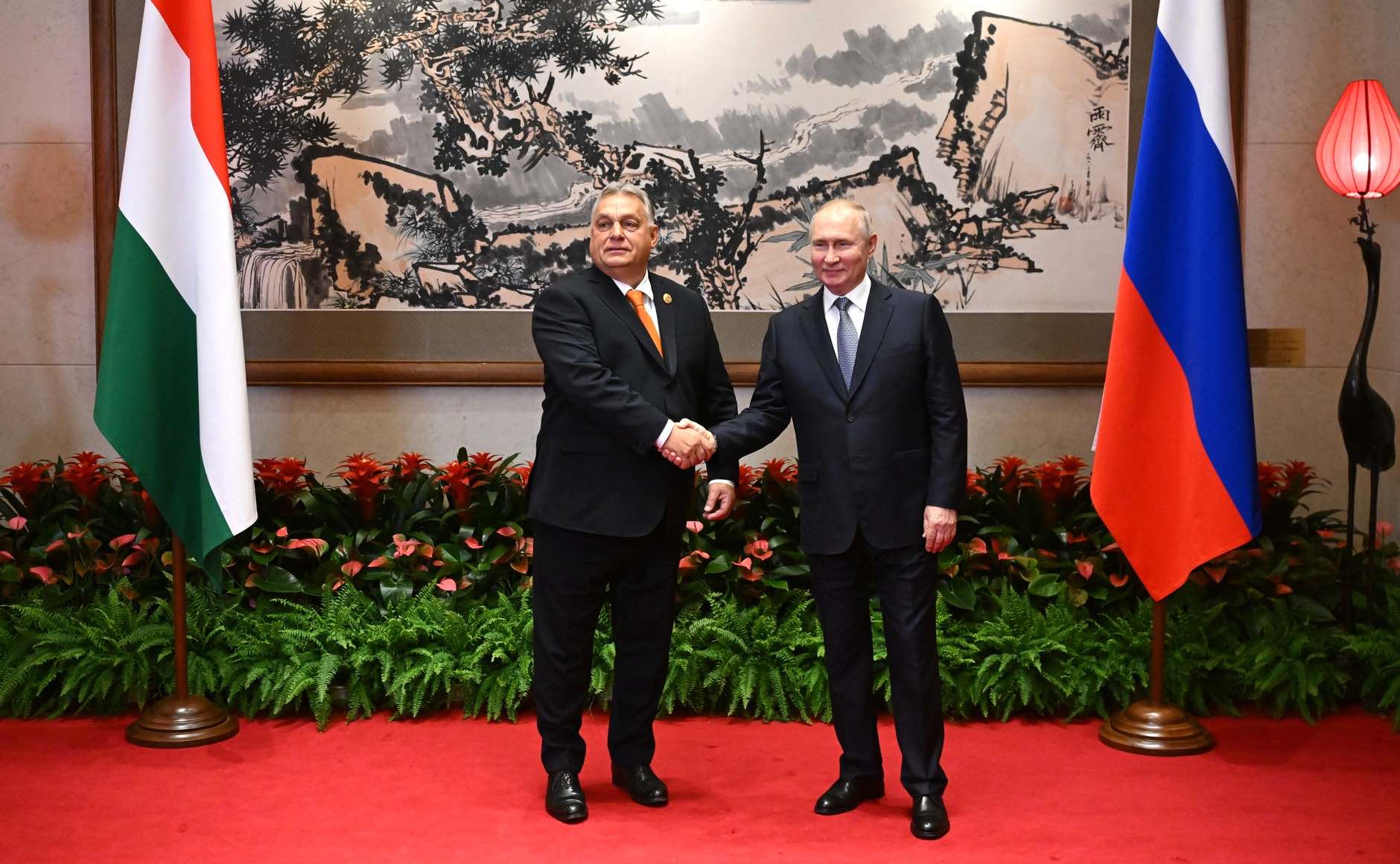
For years now, Viktor Orbán has cultivated a special relationship with Vladimir Putin, one that stands in jarring contrast to the firm stance taken by the rest of Europe. Even after Russia’s brutal invasion of Ukraine, Orbán resisted calls to sever ties. While other EU leaders shunned Moscow, he shook Putin’s hand and smiled for the cameras. While European capitals scrambled to cut energy dependence, Budapest renewed its deals with Gazprom and pressed ahead with the Kremlin-financed expansion of the Paks nuclear plant.
The Hungarian leader’s excuses are cloaked in pragmatism—cheap gas, secure supply—but the result is unmistakable: Orbán has made Hungary the weak flank in Europe’s wall against Russian aggression. Worse, he has used his country’s veto power – as has Slovakia’s Robert Fico – to water down EU sanctions, delay military aid to Ukraine, and frustrate attempts at coordinated action. In December 2023, he single-handedly blocked a €50 billion EU support package for Kyiv, holding the continent to ransom for the sake of domestic handouts and petty leverage.
This is not diplomacy. It is blackmail masquerading as sovereignty.
In Brussels, Orbán has acquired a well-earned reputation as the Council’s disruptor-in-chief. Whether threatening to derail enlargement talks, undermining defence initiatives, or objecting to collective statements on rule-of-law issues, Hungary under Fidesz has become a permanent fly in the ointment. Time and again, he has treated EU consensus not as a shared responsibility but as a personal bargaining tool.
The pattern is predictable. Orbán creates a crisis, then extracts concessions—budgetary rebates, regulatory exceptions, or silence on his domestic abuses—before grudgingly stepping back from the brink. It is a cynical game, and the cost is borne not just by Hungary’s democratic institutions but by Europe’s credibility as a geopolitical force.
The damage does not stop at the EU. In NATO, Orbán has followed the same script. Hungary’s foot-dragging over Sweden’s accession – delayed for more than a year – was another calculated performance, more about posture than principle. While other allies increased military aid to Ukraine and strengthened eastern defences, Budapest offered token gestures and sullen commentary. Orbán even questioned the wisdom of arming Kyiv, echoing Kremlin talking points at a time when unity was paramount.
But perhaps most troubling are the murky networks that increasingly surround Orbán’s political empire. Over the past decade, Hungary’s democratic institutions have been hollowed out. Independent media, prosecutors, and watchdogs have been defanged or captured. The judiciary has been brought under political control. Public tenders and EU funds routinely flow into the hands of oligarchs with personal ties to Orbán—most notoriously Lőrinc Mészáros, a childhood friend who has become one of the richest men in the country with no discernible talent beyond proximity to power.
Transparency International, OLAF, and a litany of journalists have raised red flags over misuse of EU funds, suspicious offshore networks, and signs of high-level graft. Some of these financial flows have been traced to shell companies with links to Balkan criminal syndicates. There are persistent whispers of coordination between Hungarian officials and organised smuggling networks operating across Serbia and beyond.
Hard evidence is elusive, in part because Hungary’s own anti-corruption mechanisms have been gutted. Those who dig too deep – investigative reporters, whistleblowers, watchdogs – face surveillance, legal harassment, or worse. The Pegasus spyware scandal revealed that Budapest had used military – grade spyware against its own citizens, including journalists and critics of the regime. In any other EU member state, such behaviour would prompt outrage. In Orbán’s Hungary, it is shrugged off.
None of this should come as a surprise. Orbán governs not through persuasion but through a climate of intimidation, cronyism, and manufactured grievance. He plays the eternal victim – of Brussels, of George Soros, of migrants, of imagined liberal conspiracies – while consolidating power and enriching his inner circle.
What is surprising is how long the West has tolerated it.
The EU has the tools to act – budgetary conditionality, Article 7 sanctions, and reform of the unanimity principle. Yet time and again, member states have opted for appeasement, hoping Orbán might be coaxed back into the fold. He won’t be. The idea that Hungary can remain both inside the tent and openly aligned with Putin is a fantasy that only empowers autocrats on both sides of Europe’s borders.
The West should not allow Orbán to pose as a misunderstood patriot. He is not defending European civilisation; he is eroding it from within. And until Europe treats him accordingly, it will continue to suffer the consequences of having Putin’s most faithful friend seated at the top table.
Main Image: Photo: Grigoriy Sisoev, RIA Novosti via Kremlin.ru
_________________________________________________________________________________________________________________________
Read Also: JUST HOW COSY IS THE RELATIONSHIP BETWEEN VIKTOR ORBÁN AND VLADIMIR PUTIN?
As the Prime Minister of Hungary, Orbán has navigated a delicate balancing act between maintaining his relationship with EU whist cultivating a bilateral strategic partnership with Russia under Putin’s leadership.
This relationship is rooted in historical, economic, and geopolitical considerations, and it has serious implications for Hungary’s position within the EU.
_________________________________________________________________________________________________________________________