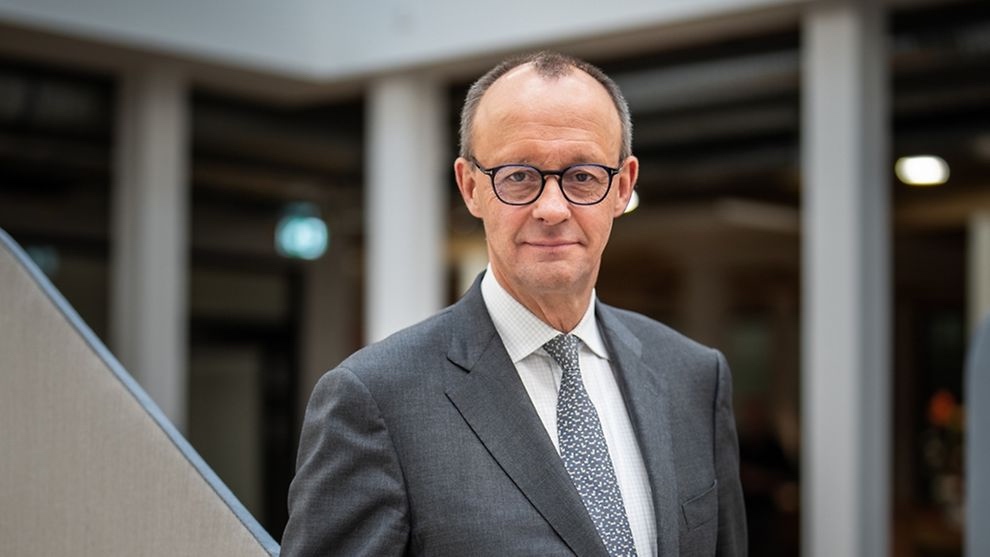
Germany’s migration debate has entered a sharper, more politically charged phase under Chancellor Friedrich Merz, as his government signals a clear intention to reverse the open-ended asylum approach that defined the past decade.
At the centre of this shift lies a contentious proposal: that a large majority of Syrians who arrived during the civil war years should now return home.
The idea, outlined in recent discussions in Berlin and reported by Politico, is ambitious in both scope and symbolism. Merz has suggested that as many as 80 percent of Syrians currently living in Germany could be expected to leave within the coming years, as conditions in Syria—at least formally—stabilise following the end of the Assad era.
For supporters, the argument is straightforward. The original justification for granting protection to hundreds of thousands of Syrians was rooted in a brutal civil war. With that conflict now over, attention is shifting toward reconstruction. In this framing, Germany has fulfilled its humanitarian duty; the next step is for Syrians themselves to help rebuild their country.
But the politics of this proposal cannot be separated from developments inside Germany over the past decade—developments that have steadily eroded public confidence in the country’s migration system.
Since 2015, when Angela Merkel took the fateful decision to admit more than a million asylum seekers, Germany has wrestled with the social and political consequences of rapid demographic change. While many refugees have integrated successfully, finding work and contributing to society, the process has been uneven and, at times, deeply contentious.
A series of high-profile violent incidents—some involving asylum seekers or recent arrivals—has had a disproportionate impact on public perception. Attacks against women in particular have become a flashpoint in the national debate. The events of New Year’s Eve 2015–16 in Cologne, where large numbers of women reported sexual assaults, remain etched in the public consciousness. Although those incidents involved individuals from a range of backgrounds, they became emblematic of wider anxieties about integration, law enforcement, and cultural tensions.
In the years since, further cases—often amplified in media and political discourse—have reinforced a sense among parts of the German public that the state has struggled to maintain order and uphold social norms. It is important to note that crime data does not support sweeping generalisations about any single group, and researchers consistently caution against attributing complex social problems to nationality or refugee status alone. Nonetheless, perception has proved politically powerful.
That perception has fuelled growing anger at the legacy of Merkel’s migration policies, particularly among voters who feel their concerns were dismissed or downplayed during the height of the refugee crisis. The rise of the far-right Alternative für Deutschland (AfD) has been the most visible manifestation of that anger, but the pressure has extended well beyond the political fringes.
Merz’s approach can be seen, in part, as a response to this shifting mood. By advocating a structured and large-scale return of Syrians, he is signalling that the era of open-ended protection is over—and that the government is prepared to act on public concerns.
Yet the proposal raises as many questions as it answers.
First, there is the issue of feasibility. Germany is home to hundreds of thousands of Syrians, many of whom have now lived in the country for nearly a decade. They have jobs, families, and, in many cases, children who know no other home. Encouraging—or compelling—them to leave will not be straightforward, either legally or practically.
Second, there is the question of conditions in Syria itself. While the war may have ended, the country remains deeply scarred. Infrastructure is damaged, the economy is fragile, and political stability is far from guaranteed. Critics argue that large-scale returns risk placing vulnerable people in precarious situations, potentially undermining the very stability that Germany hopes to support.
Third, there is the economic dimension at home. Germany faces acute labour shortages across multiple sectors, from healthcare to construction. Syrian refugees have, over time, become part of that workforce. A rapid reduction in their numbers could create new strains, even as the government seeks to reassure voters on migration.
There are also broader European implications. Germany has long set the tone for EU migration policy. A decisive shift toward return and restriction in Berlin is likely to embolden other governments to follow suit, accelerating a continent-wide move toward tougher asylum rules.
At the same time, the debate touches on deeper questions about identity, responsibility, and the limits of solidarity. Merkel’s decision in 2015 was widely praised as a moral stand, but it also exposed the political risks of large-scale humanitarian commitments in an era of rising populism. Merz’s policy can be read as an attempt to recalibrate that balance—placing greater emphasis on control, reciprocity, and eventual return.
Whether it succeeds will depend not only on policy design, but on public trust. For many Germans, concerns about security, integration, and social cohesion remain unresolved. Addressing those concerns without slipping into simplistic or divisive narratives will be one of the central challenges facing the government.
A decade on from the refugee crisis, Germany is no longer asking how many people it can take in. Instead, it is confronting a more difficult question: how, and under what conditions, those who came should eventually leave.
The answer will shape not just Germany’s future, but the direction of European migration policy for years to come.
Main Image: Federal Government https://www.bundesregierung.de/breg-en/news/friedrich-merz-2341938
Click here for more News & Current Affairs at EU Today
Click here to check out EU TODAY’S SPORTS PAGE!
___________________________________________________________________________________________________________________