In the British constitutional imagination, the monarch stands above politics, insulated from scandal by ritual, restraint and the steadying force of tradition.
The latest disclosures in the British press however — including reported emails from 2019 warning the then Prince of Wales about his brother’s business entanglements — have sharpened a question that has lingered for years: not simply what Prince Andrew did, but what King Charles III knew, and when.
The reporting, which first surfaced in the Mail on Sunday, centres on correspondence allegedly sent to Charles in August 2019 by a whistleblower with detailed knowledge of Andrew’s financial dealings.
_____________________________________________________________________________________________________________________________
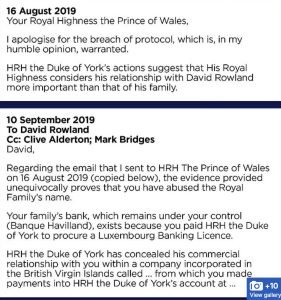
Screenshot From The Mail, February 22nd, 2026.
The warning, routed via the royal law firm Farrer & Co., claimed that the Duke of York was permitting royal prestige to be leveraged for private advantage and suggested conduct that placed personal interests above familial and institutional duty. The language, by contemporary accounts, was direct and unequivocal.
At the time, Andrew’s disastrous interview with BBC Newsnight had already ignited public outrage over his association with the convicted sex offender Jeffrey Epstein.
Within days of that broadcast, he withdrew from public duties. Palace aides presented that withdrawal as evidence of decisive internal management. The heir to the throne, it was widely reported, had recognised the gravity of the situation and moved to protect the institution.
But if Charles had received a formal warning months earlier about Andrew’s broader business practices, that narrative now appears incomplete.
The issue is not merely one of optics. It is one of leadership. In any major institution — corporate, political, philanthropic — credible whistleblower concerns reaching the desk of the chief executive would trigger scrutiny, investigation and, if warranted, intervention. The monarchy, though unique, is not exempt from that logic. Its authority rests not on coercive power but on public consent. When ethical alarms are sounded and seemingly unheeded, the erosion of that consent can be swift.
Defenders of the King argue that palace correspondence is complex, that allegations require substantiation, and that family dynamics complicate formal inquiries. They note that Andrew was ultimately sidelined, stripped of patronages and military affiliations, and effectively removed from public life. Yet these steps were taken after public scandal had already metastasised — not when early warnings were reportedly issued.
The timing matters.
For King Charles, who ascended the throne in 2022 following the death of Elizabeth II, the promise was of a streamlined, modern monarchy: leaner, more transparent, better attuned to contemporary expectations. His long apprenticeship as Prince of Wales had been marked by causes — climate change, interfaith dialogue, architecture — that won him admiration in some quarters and skepticism in others. But on questions of internal discipline, the record now invites scrutiny.
It also intersects with a subtler, more sensitive issue: the King’s personal standing with the British public.
Opinion polling in Britain tends to show steady if unspectacular approval for Charles. Much of the press coverage since his accession has been respectful, even protective, emphasising continuity and stability. Yet popularity is not the same as affection. And affection, in a monarchy, is currency.
The memory of Diana, Princess of Wales remains vivid nearly three decades after her death. Diana’s charisma, vulnerability and apparent estrangement from the royal machine forged a powerful bond with the public. For many Britons, especially those who came of age in the 1980s and 1990s, the wounds of that period never fully healed. Charles’s treatment of her — the breakdown of their marriage, the public recriminations — is not forgotten. It lingers in the national consciousness, resurfacing whenever the monarchy confronts moral turbulence.
Camilla, Queen of the United Kingdom, has worked steadily to rehabilitate her image. Years of quiet charity work and an absence of overt controversy have softened earlier hostility. Yet she remains, to many, a distant figure — respected perhaps, but not embraced with warmth. She lacks the instinctive rapport that Diana commanded. In times of calm, that distance may be inconsequential. In times of crisis, it becomes more pronounced.
By contrast, the Prince and Princess of Wales project a different kind of monarchy — youthful, approachable, media-savvy. William, Prince of Wales consistently ranks among the most popular members of the royal family. His wife, Catherine, Princess of Wales, commands broad admiration for her composure and relatability. Together they embody a generational shift that many Britons find reassuring.
It is not difficult to find voices, particularly in quieter corners of public debate, who muse about whether the monarchy’s long-term stability might be better served by a sooner-than-expected transition. Such speculation has traditionally been dismissed as fringe — the British system is designed for continuity, not elective succession. Abdication carries heavy historical freight. The very word evokes the crisis of 1936.
If it were to be established that Charles had been explicitly warned in 2019 about Andrew’s questionable dealings and failed to act decisively, the moral calculus changes. Responsibility would no longer rest solely with a disgraced younger brother. It would extend upward, toward the center of the institution. Even if no legal culpability attaches, the perception of foreknowledge followed by inaction could prove corrosive.
The monarchy has survived scandals before — divorces, tapes, tell-all interviews. What distinguishes the current moment is the convergence of ethical questions with generational comparison. The King’s authority is secure in law. But legitimacy, in a constitutional monarchy, is as much emotional as legal.
Some palace insiders suggest that Charles, mindful of past missteps, is determined not to allow familial loyalty to override institutional preservation. Recent moves to distance the Crown from Andrew, they argue, demonstrate resolve. Yet critics counter that such resolve, had it manifested earlier, might have averted the present turmoil.
The British press, often deferential in tone, has begun to probe more sharply. The question of “what was known” is unlikely to fade. Nor will the undercurrent of public memory — of Diana’s lonely walk through the minefields of Angola, of the palpable grief that followed her death, of a monarchy once perceived as cold and unyielding.
King Charles has long argued that the Crown must adapt to survive. Adaptation now may require more than incremental reform. It may demand a candid reckoning with the past — including the choices made in 2019 — and a recognition that public patience is not inexhaustible.
Whether the current crisis ultimately accelerates a generational transition is unknowable. The British constitution offers no straightforward mechanism for a mid-reign handover absent abdication. But history shows that when public confidence wanes, even ancient institutions can find themselves contemplating unthinkable outcomes.
For now, the King remains on the throne, his reign still relatively young. Yet the emails reported this week have cast a long shadow. They suggest that the seeds of today’s crisis were visible years ago — and that an opportunity to contain them may have been missed.
In monarchies, as in democracies, trust is cumulative. It builds slowly and erodes quickly. If Charles was indeed forewarned, the challenge before him is not only to address his brother’s conduct but to confront the perception that he, too, failed in a moment that required clarity and courage.
The British public has shown, time and again, a capacity for forgiveness. What it demands in return is honesty. Whether that demand is met — and whether it is met in time — may determine not only the fate of a reign, but the shape of the monarchy itself.
From Palace to Police Cell: the Former Prince Andrew and the Crown’s Gravest Crisis
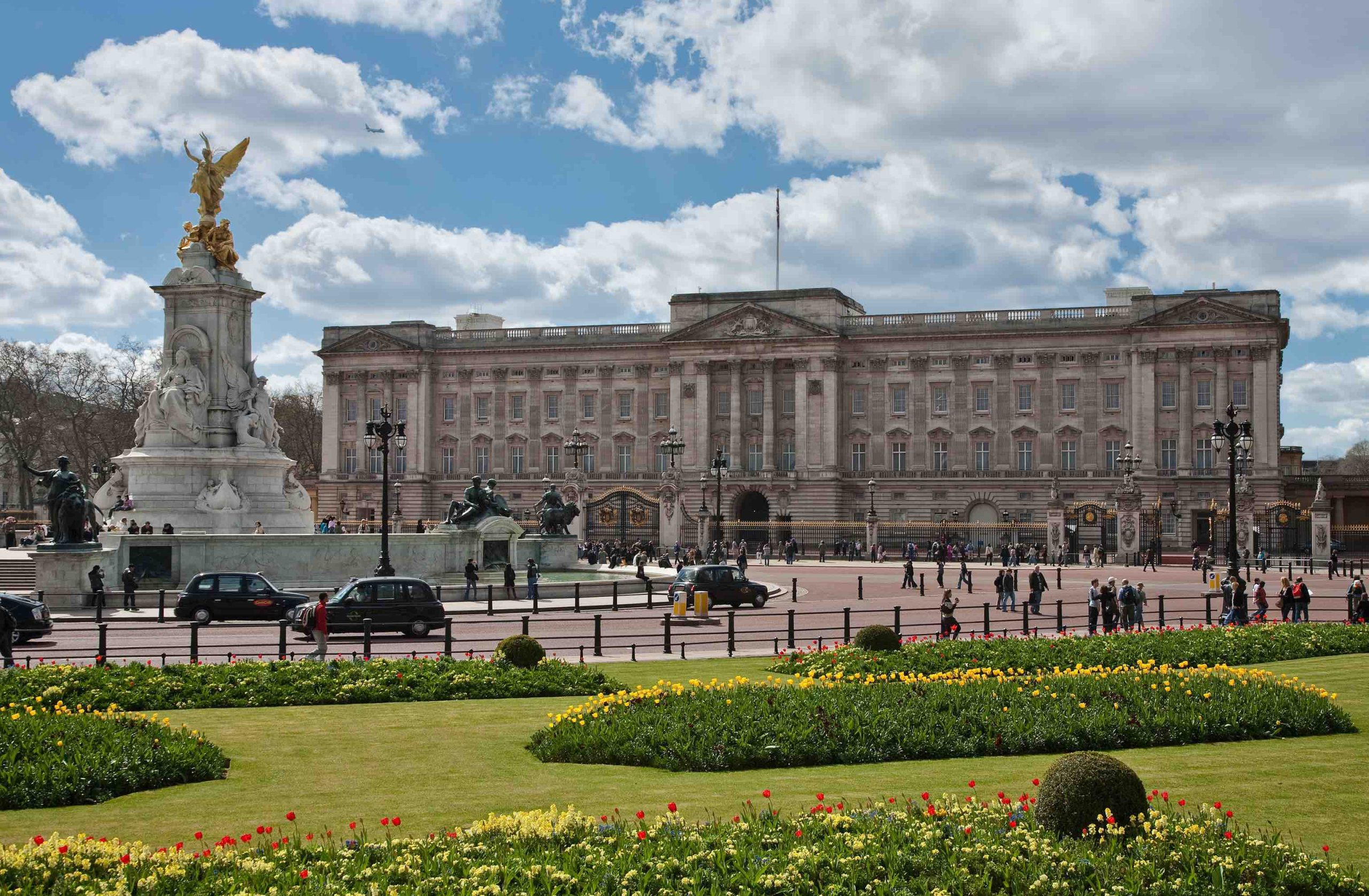
Main Image: Door Diliff – Eigen werk, CC BY-SA 3.0, https://commons.wikimedia.org/w/index.php?curid=6488843
Click here for more News & Current Affairs at EU Today
Click here to check out EU TODAY’S SPORTS PAGE!
_____________________________________________________________________________________________________________________