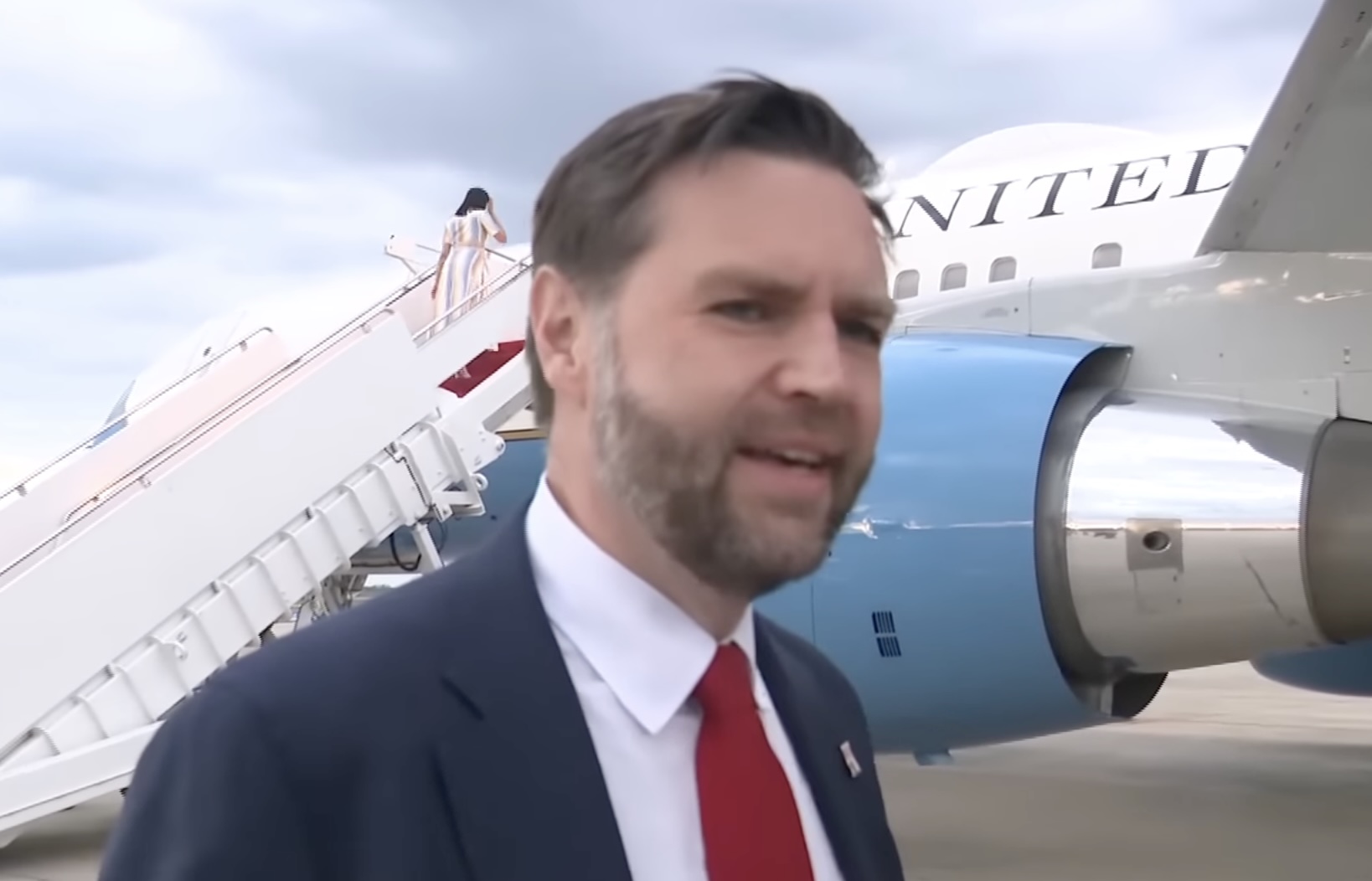
US Vice President JD Vance arrived in Hungary on Tuesday for a two-day visit that includes bilateral meetings with Prime Minister Viktor Orbán and public remarks on US-Hungary relations, placing Washington visibly alongside one of its closest political allies in Europe just days before Hungary’s parliamentary election on 12 April.
The visit was announced by the White House on 2 April and was under way by 7 April, giving the trip an immediate electoral and geopolitical significance.
Formally, the programme is presented as an official visit centred on the partnership between the United States and Hungary. The White House said Vance and Second Lady Usha Vance would be in Budapest from 7 to 8 April, that the vice president would hold bilateral meetings with Orbán, and that he would deliver remarks on the “rich partnership” between the two countries. In ordinary circumstances, that would amount to a standard high-level visit. The timing, however, makes that interpretation difficult to sustain. Hungary is now in the closing stretch of what is widely regarded as Orbán’s most difficult election since returning to office in 2010.
That timing is the central fact of the story. Vance is not visiting in a political vacuum. He is arriving days before polling day, with Orbán and his Fidesz party facing a more competitive contest than in previous cycles. Most polls place the centre-right Tisza party, led by Péter Magyar, ahead of Fidesz. That gives the trip a meaning beyond protocol: it is a public signal that the current US administration sees Orbán not simply as a counterpart, but as a partner whose political survival matters.
For Orbán, the visit offers a visible endorsement from Washington at a moment when his campaign is under pressure from domestic concerns, above all inflation and the cost of living. For Vance, it is a chance to reinforce an ideological and strategic alignment that has been developing for some time between the Trump administration and Budapest. Orbán has long positioned himself as a critic of migration, liberal institutional politics and what he portrays as external interference in national sovereignty. Those themes have made Hungary a point of reference for parts of the American right. The result is that a bilateral visit now carries the weight of a broader political message.
The visit also underlines a wider European problem: Hungary is not just another member state with an awkward government. It is an EU and NATO member whose political direction affects sanctions, Ukraine policy, energy questions and the Union’s internal cohesion. Orbán has repeatedly taken positions at odds with the mainstream of EU policy, including on Russia and on support for Ukraine. A high-profile visit from the US vice president therefore does more than help Orbán domestically. It sharpens the sense that Hungary is a site of active contest over Europe’s political direction and over the shape of transatlantic alignment under a second Trump presidency.
There is, however, a limit to what such an intervention can achieve. Reuters noted that analysts are unsure whether Vance’s presence will help or hurt Orbán, and that domestic economic conditions are likely to weigh more heavily with voters than foreign backing. That is an important caution. External endorsement can energise a political base, but it can also reinforce the opposition argument that the election is being drawn into a larger ideological struggle not of Hungary’s making. Reuters also reported that Magyar has criticised the visit as foreign interference. That charge goes to the heart of the campaign’s final phase, where questions of sovereignty, outside influence and national control are already central.
The significance of the trip lies in its clarity. A sitting US vice president is in Budapest on 7 April, meeting Orbán and appearing in public before a tightly contested vote on 12 April. The White House confirmed the visit in advance. The timing is exact, the political stakes are obvious, and the consequences extend beyond Hungary’s domestic contest.
Whether the visit shifts votes is a separate question, and at this stage there is no solid basis for claiming that it will. What can be said with confidence is narrower and more important: the United States has chosen to make its political preference visible in Budapest at a decisive point in the campaign, and that choice turns Hungary’s election into more than a national event. It is now also a test of how far this new phase of transatlantic politics is prepared to operate openly inside Europe’s electoral arena.