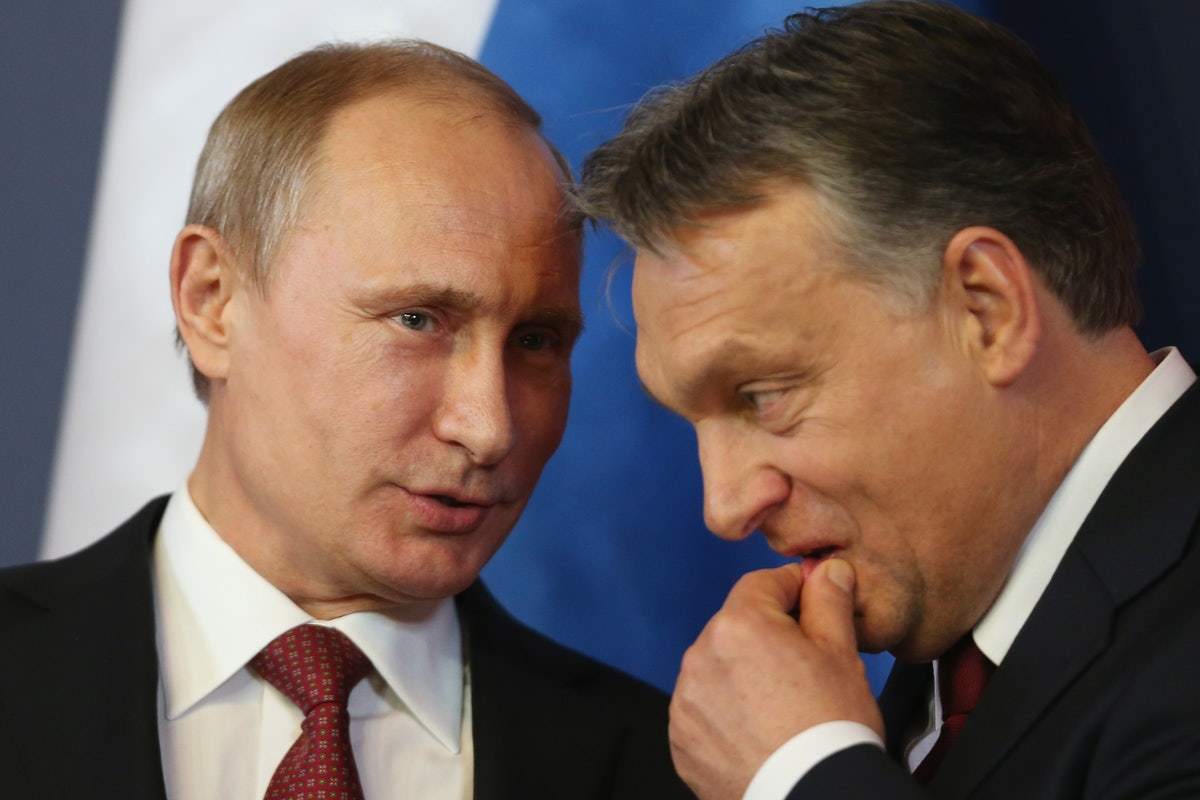
Hungary has blocked the final step needed to unlock a proposed €90 billion EU loan package for Ukraine in 2026–27 by refusing to back changes to the bloc’s long-term budget, according to officials briefed on the process.
The package is designed to provide Ukraine with large-scale, predictable financing for the next two years through EU borrowing on capital markets, backed by the EU budget. EU leaders agreed the political outline of the plan at the European Council in December 2025, after failing to reach consensus on more far-reaching ideas such as using immobilised Russian state assets as collateral for a much larger funding scheme.
The European Commission subsequently presented a legislative package in January 2026 to establish the instrument and the budget guarantees needed for borrowing. The Council of the EU, working through member states’ diplomats, advanced the files in early February, and the European Parliament approved the three-part legislative package soon afterwards.
Under the EU’s legislative structure, the €90 billion facility depends on three separate regulations moving through final adoption in the Council. Two can be agreed by qualified majority voting. The third requires unanimity because it amends the EU’s multiannual financial framework (MFF) for 2021–27 — the legal basis for the Union’s long-term spending ceiling and the budget “headroom” used to guarantee EU borrowing.
EU officials said Hungary declined to support the MFF amendment at a Council-level meeting on Friday 20 February, stopping the package at the last stage. The two other regulations — one establishing the “Ukraine Support Loan” under an enhanced cooperation mechanism and another adjusting the existing Ukraine Facility — were described as procedurally ready for finalisation.
Officials involved in the timetable had expected the Council to adopt the package and for the acts to be signed in the European Parliament on 24 February, a date chosen to coincide with the anniversary of Russia’s full-scale invasion of Ukraine. Hungary’s refusal to agree the budget amendment removes the unanimity required for the guarantee structure and, as a result, prevents the EU from proceeding with the borrowing operation as designed.
The dispute is linked to a broader confrontation over energy transit. In recent weeks, Hungary and Slovakia have publicly pressed the European Commission to intervene after disruptions affecting the Druzhba oil pipeline route through Ukraine, which remains one of the residual channels for Russian crude deliveries into parts of Central Europe despite the EU’s wider sanctions regime.
European Pravda, citing EU sources, reported that Budapest had warned it would block the €90 billion loan until Ukraine restored Russian oil transit to Europe via Druzhba. Additional reporting in international media has presented the Hungarian government’s position as a refusal to accept pressure while Hungary argues that its energy security has been put at risk.
The planned financing is intended to cover a substantial share of Ukraine’s forecast funding needs in 2026 and 2027. Council documentation describing the legal framework states that the €90 billion would represent roughly two-thirds of Ukraine’s needs over that period, supporting macro-financial stability while also enabling investment in defence industrial capacity and procurement. The remainder is expected to come from other partners, including G7 countries.
The structure rests on the EU raising money on markets and lending it onward, with the EU budget providing guarantees. Because that guarantee depends on the MFF, a single member state can stop the legal mechanism by withholding consent to the budget regulation, even if it cannot prevent the other acts moving by qualified majority.
Hungary’s stance also reopens the political question of whether the EU can sustain long-term, large-scale borrowing for Ukraine without recurrent unanimity battles. While the December 2025 summit produced an agreement in principle, it did so only after Hungary, Slovakia and the Czech Republic signalled they would not participate in the scheme in a way that left them bearing repayment or interest costs, according to reporting at the time.
For Ukraine, the timing matters. The EU’s proposed facility is intended to provide predictable funding as the war enters a fifth year and as Kyiv manages wartime budget pressures alongside the costs of defence and reconstruction. Financial Times reporting described the blocked loan as central to stabilising Ukraine’s finances in 2026 and noted wider knock-on effects for other international support arrangements.
The immediate question is whether Hungary will lift its objection, whether the EU will seek to modify the budget component to address Budapest’s demands, or whether member states will attempt an alternative legal route that avoids a unanimity requirement. For now, officials say the two non-budget regulations can proceed, but without the MFF amendment the €90 billion loan cannot be launched in its current form.